


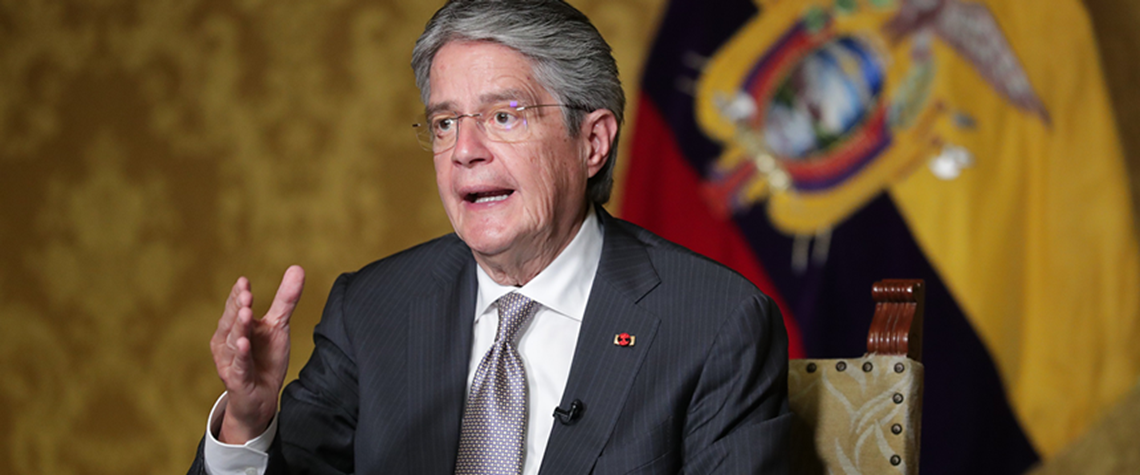
Guillermo Lasso, Ecuador’s president

Letter from South America: Outlier Ecuador offers alternative path
The country has been working to attract renewed upstream foreign investment since quitting Opec
Ecuador may remain one of the few right-wing governments left in South America by the end of 2022. Elections are looming in Colombia and Brazil, where leftist candidates lead in the polls, and the political landscape is changing significantly in the region—which will no doubt affect hydrocarbons policies. Already, the frontrunner for the Colombian presidency has called for an ‘anti-oil’ bloc to be created by aligned South American governments, an exercise akin to cutting off one’s nose to spite one’s face for commodity export-dependent economies. But all signs now point to the fact that Ecuador will forge a different path, at least in the near term. The surprise victory of Guillermo Lasso, a

Also in this section
1 April 2026
Golden Pass’s startup offers QatarEnergy a timely boost but may also force a difficult choice between honouring disrupted contracts and capitalising on soaring spot LNG prices
1 April 2026
It is not a case of if or when, but the length and magnitude of economic damage from elevated oil prices
1 April 2026
The US-Iran conflict demonstrates the need for diversification in several senses of the word. It also exposes the limits of Washington applying pressure on major oil and gas producers it considers geopolitical adversaries
31 March 2026
Disappointing results in its bidding round are a reality check for Libya, and global exploration generally



