


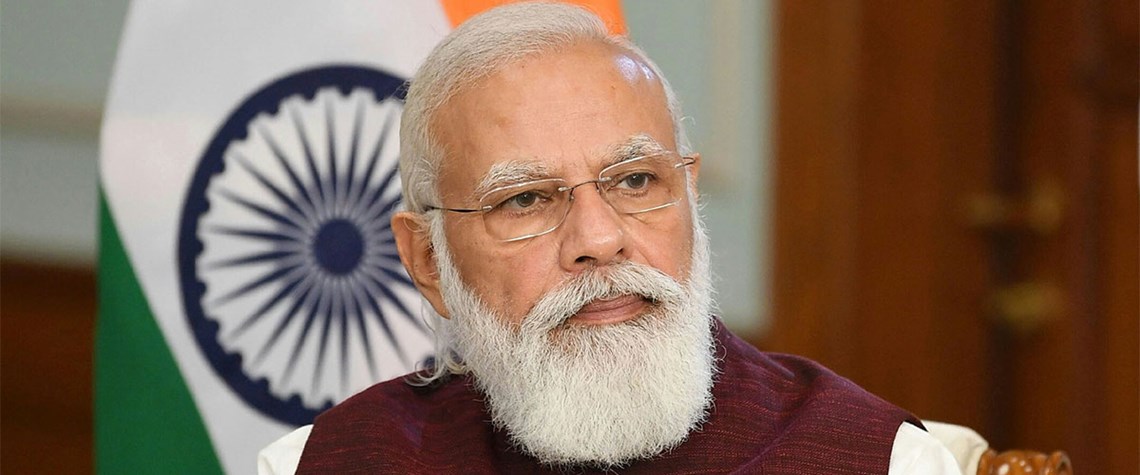
Prime Minister Modi
Letter from India: Cost of import dependence grows
Surging demand, declining domestic output, high prices and a weakening rupee are all pushing up the country’s import bills
Indian prime minister Narendra Modi convened a meeting of oil industry stakeholders back in March 2015, nine months into his first term in office, to discuss increasing domestic hydrocarbons production and reducing import dependence from what was then 77pc to 67pc by 2022, and further to 50pc by 2030. But as we reach the first checkpoint on that journey, hitting targets on reducing his country’s reliance on non-domestic energy looks increasingly unlikely. In fact, the country’s oil imports have risen by 8.6pc since 2015, with imports accounting for 85.6pc of India’s crude demand in the April 2021-March 2022 financial year. India’s dependence on gas imports is less pronounced. But, of a consu

Also in this section
21 April 2026
After overcoming a COVID-induced demand collapse with several years of successful market management, geopolitical events have conspired to provide the pact’s biggest test to date
21 April 2026
The regime’s policy of using nuclear ambiguity as a deterrent may have failed but it has realised it has other cards to play, while its neighbours are reappraising their approach to security
21 April 2026
As the global energy system undergoes a fundamental realignment, Algihaz Holdings has established itself as a critical player bridging conventional energy markets and the next generation of renewable infrastructure.
21 April 2026
The 25th WPC Energy Congress is taking place from 11-15 October 2026 at the Riyadh Front Exhibition & Conference Center.



