


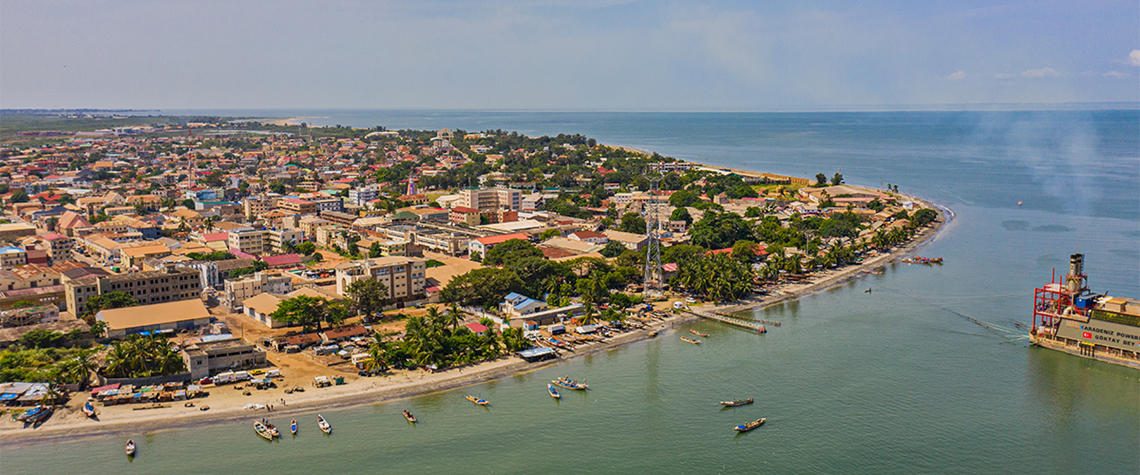
Equatorial Guinea’s capital city, Malabo
Indies look to Equatorial Guinea as ExxonMobil pulls out
But even planned exploration activity is unlikely to reverse declining output from mature fields
Equatorial Guinea’s oil sector is in a period of transition. Output is declining, and ExxonMobil is set to depart the Central African nation soon, following years of operations. But at the same time, the OPEC member is also seeing plenty of IOC activity, while its NOC GEPetrol is poised to assume a greater role in the country’s upstream, so the outlook remains mixed. Equatorial Guinea’s oil and gas production is in a “long term trend of steady decline”, according to consultancy BMI. The country’s upstream is dominated by mature fields that have been in operation for years. Production of crude and other liquids totalled an estimated 139,900b/d last year, and BMI predicts that figure will fall

Also in this section
1 April 2026
Golden Pass’s startup offers QatarEnergy a timely boost but may also force a difficult choice between honouring disrupted contracts and capitalising on soaring spot LNG prices
1 April 2026
It is not a case of if or when, but the length and magnitude of economic damage from elevated oil prices
1 April 2026
The US-Iran conflict demonstrates the need for diversification in several senses of the word. It also exposes the limits of Washington applying pressure on major oil and gas producers it considers geopolitical adversaries
31 March 2026
Disappointing results in its bidding round are a reality check for Libya, and global exploration generally



