


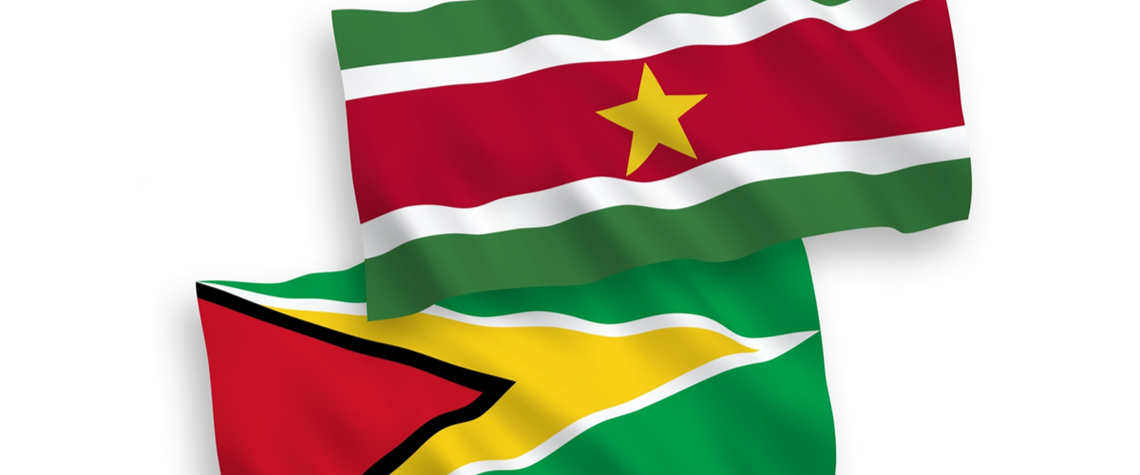
Recent discoveries offshore Guyana and Suriname

Letter from South America: Guyana and Suriname poised for change
The enormous exploration success of recent years leaves the South American neighbours at a crossroads
Guyana and Suriname are unique places, and not just because of the recent oil boom. For centuries sugarcane production dominated the coastal areas, split between colonies controlled by the British and the Dutch, while the interior was left much as it was before Columbus made his trans-Atlantic journey. Both colonial powers left an indelible mark on the two countries in terms of language and, most notably, demographics. Forced migrations resulted in heterogenous societies that have influences from India, Java and the African continent. Politics are interesting, to say the least. The normal pace of life in the region changed dramatically in 2015. Before then, Guyana had not seen any success

Also in this section
1 April 2026
Golden Pass’s startup offers QatarEnergy a timely boost but may also force a difficult choice between honouring disrupted contracts and capitalising on soaring spot LNG prices
1 April 2026
It is not a case of if or when, but the length and magnitude of economic damage from elevated oil prices
1 April 2026
The US-Iran conflict demonstrates the need for diversification in several senses of the word. It also exposes the limits of Washington applying pressure on major oil and gas producers it considers geopolitical adversaries
31 March 2026
Disappointing results in its bidding round are a reality check for Libya, and global exploration generally



