


Newsletters | Request Trial | Log in | Advertise | Digital Issue   |   Search
  • Upstream
  • Midstream & Downstream
  • Gas & LNG
  • Trading & Markets
  • Corporate & Finance
  • Geopolitics
  • Podcasts
Search
Related Articles
Qatar’s Golden Pass dilemma
Golden Pass’s startup offers QatarEnergy a timely boost but may also force a difficult choice between honouring disrupted contracts and capitalising on soaring spot LNG prices
Lessons from the crisis
The US-Iran conflict demonstrates the need for diversification in several senses of the word. It also exposes the limits of Washington applying pressure on major oil and gas producers it considers geopolitical adversaries
Libya's potential goes unrealised
Disappointing results in its bidding round are a reality check for Libya, and global exploration generally
Letter from the US: The oil market abyss
The overlooked oil supply issue is that even after the Strait of Hormuz opens, barrels won’t readily return
How Russia gains from the Hormuz supply shock
The US may be systemically stripping Russia of key geopolitical allies, but Moscow can reap rewards from the Hormuz crisis, both in the short and long term
Hormuz crisis delivers tailwinds for US LNG
Disruptions to Qatari LNG exports have highlighted the risks of concentrated supply, potentially strengthening the long-term position of US exporters despite limited near-term flexibility
Trump’s bid to reshape the global energy order
From Venezuela to Hormuz, the US—backed by the most powerful military force ever assembled—is redrawing not only oil and gas flows but also the global balance of energy power
Energy dominance as diplomatic leverage
Energy sanctions are becoming an increasingly prominent tool of US foreign policy, with the country’s growth in oil and gas production allowing it to impose pressure on rivals without jeopardising its own energy security or that of its allies, argues Matthew McManus, a visiting fellow at the National Center for Energy Analytics
Trump’s gasoline price pledge paradox
The US president has repeatedly promised to lower gasoline prices, but this ambition conflicts with his parallel aim to increase drilling and could be upended by his war against Iran
Middle East oil vulnerabilities have been exposed
The killing of Iran’s Supreme Leader Ayatollah Khamenei in US–Israeli strikes marks the most serious escalation in the region in decades and a bigger potential threat to the oil market than the start of the Russia-Ukraine crisis
Opec Saudi Arabia Russia US Venezuela Libya Donald Trump
Derek Brower
Vienna
6 July 2018
Follow @PetroleumEcon
Forward article link
Share PDF with colleagues

Who's your swing producer now?

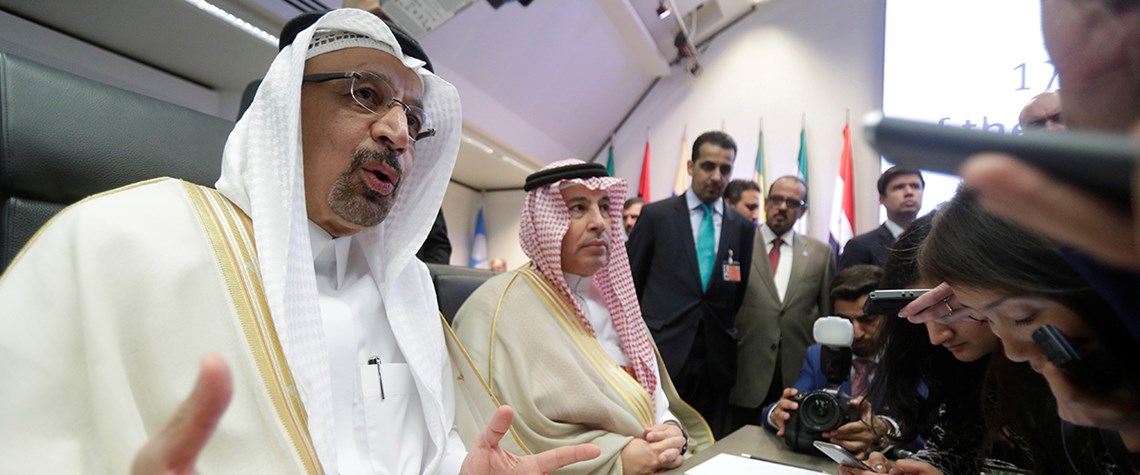
Under pressure from Trump, Saudi Arabia has demolished the Opec deal and will now pour oil into a market that is suddenly running short

Late in the evening of 21 June, Bijan Namdar Zangeneh, Iran's oil minister, walked out of Opec's headquarters on Helferstorferstraße and rushed to the nearby Kempinski hotel. He unloaded on the waiting press pack, briefing Iranian journalists off the record. Iran would accept no deal to increase oil output at the next day's Opec meeting, he said. Doing so was tantamount to "suicide", he told the Iranian reporters. The Opec meeting seemed destined for an ugly confrontation, the climax of a week of high-stakes petro-diplomacy. While Zangeneh huffed, a crucial meeting carried on without him back in Opec's headquarters. The Joint Ministerial Monitoring Committee (JMMC), led by Saudi Arabia and R

Also in this section
Qatar’s Golden Pass dilemma
1 April 2026
Golden Pass’s startup offers QatarEnergy a timely boost but may also force a difficult choice between honouring disrupted contracts and capitalising on soaring spot LNG prices
The demand destruction timebomb
1 April 2026
It is not a case of if or when, but the length and magnitude of economic damage from elevated oil prices
Lessons from the crisis
1 April 2026
The US-Iran conflict demonstrates the need for diversification in several senses of the word. It also exposes the limits of Washington applying pressure on major oil and gas producers it considers geopolitical adversaries
Libya's potential goes unrealised
31 March 2026
Disappointing results in its bidding round are a reality check for Libya, and global exploration generally

Share PDF with colleagues

COPYRIGHT NOTICE: PDF sharing is permitted internally for Petroleum Economist Gold Members only. Usage of this PDF is restricted by <%= If(IsLoggedIn, User.CompanyName, "")%>’s agreement with Petroleum Economist – exceeding the terms of your licence by forwarding outside of the company or placing on any external network is considered a breach of copyright. Such instances are punishable by fines of up to US$1,500 per infringement
Send

Forward article Link

Send
Sign Up For Our Newsletter
Project Data
Maps
Podcasts
Social Links
Featured Video
Home
  • About us
  • Subscribe
  • Reaching your audience
  • PE Store
  • Terms and conditions
  • Contact us
  • Privacy statement
  • Cookies
  • Sitemap
All material subject to strictly enforced copyright laws © 2025 The Petroleum Economist Ltd
Cookie Settings
;

Search

