


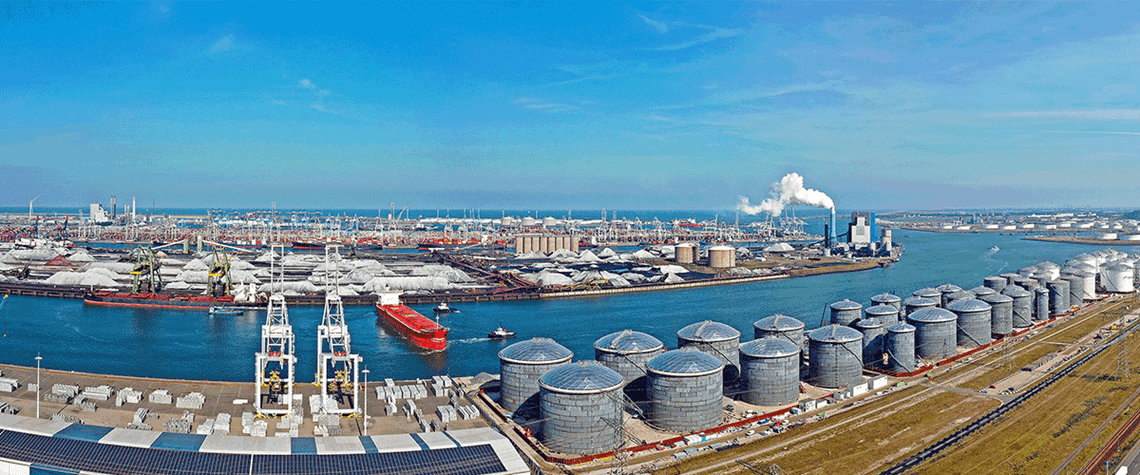
Rotterdam, Europe’s largest port
Ukraine fallout continues to support tanker freight rates
Freight rates for clean tankers—the specialist vessels that transport refined petroleum products—reached multi-year highs in 2022 and are likely to remain strong going into 2023
Clean freight rates saw “multi-year highs this summer… [that] remained elevated through November, driven largely by the effects of Russia’s full-scale invasion of Ukraine”, according to the EIA. Rates for the medium-range (MR) class of clean tankers—the most ubiquitous of product-transporting vessels—even topped those logged early in the pandemic, when the global slump in demand for refined products caused a spike in requirements for tankers to act as floating storage, the EIA states. Tanker freight rates are clustered around common shipping routes, which serve as indicators or even benchmarks for the cost of shipping more generally. "Since February 2022,” rates for voyages involving Russian

Also in this section
21 April 2026
After overcoming a COVID-induced demand collapse with several years of successful market management, geopolitical events have conspired to provide the pact’s biggest test to date
21 April 2026
The regime’s policy of using nuclear ambiguity as a deterrent may have failed but it has realised it has other cards to play, while its neighbours are reappraising their approach to security
21 April 2026
As the global energy system undergoes a fundamental realignment, Algihaz Holdings has established itself as a critical player bridging conventional energy markets and the next generation of renewable infrastructure.
21 April 2026
The 25th WPC Energy Congress is taking place from 11-15 October 2026 at the Riyadh Front Exhibition & Conference Center.



