


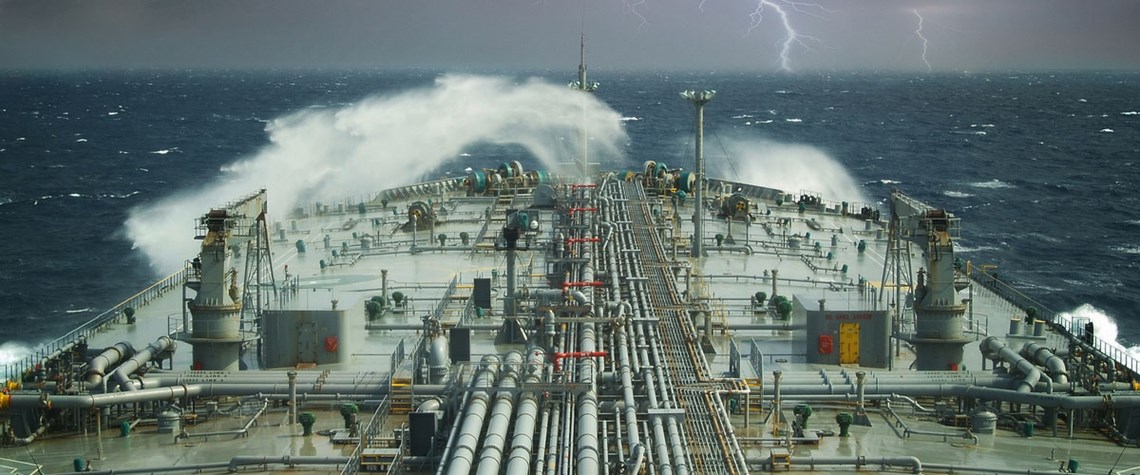
LNG is already the industry’s clear choice as transitional fuel
Shipping faces tough decarbonisation choices
Supply chains will be critical as the maritime sector looks for alternative fuels
Shipping accounts for significant greenhouse gas (GHG) emissions, and the industry is accelerating its efforts to meet ambitious UN decarbonisation goals. But it remains unclear which competing solution—or combination of solutions—will prevail. The International Maritime Organisation (IMO) is targeting a 50pc cut in GHG emissions from shipping by 2050, relative to 2008 figures, and wants to slash the sector’s carbon intensity—the amount of CO2 emitted per ton-mile—by 40pc by 2030 and 70pc by 2050. A coalition of IMO member states —which together control a major share of the world’s shipping tonnage and include Greece, Liberia, Japan, Malta, Switzerland and Singapore—propose the organisation

Also in this section
21 April 2026
After overcoming a COVID-induced demand collapse with several years of successful market management, geopolitical events have conspired to provide the pact’s biggest test to date
21 April 2026
The regime’s policy of using nuclear ambiguity as a deterrent may have failed but it has realised it has other cards to play, while its neighbours are reappraising their approach to security
21 April 2026
As the global energy system undergoes a fundamental realignment, Algihaz Holdings has established itself as a critical player bridging conventional energy markets and the next generation of renewable infrastructure.
21 April 2026
The 25th WPC Energy Congress is taking place from 11-15 October 2026 at the Riyadh Front Exhibition & Conference Center.



