


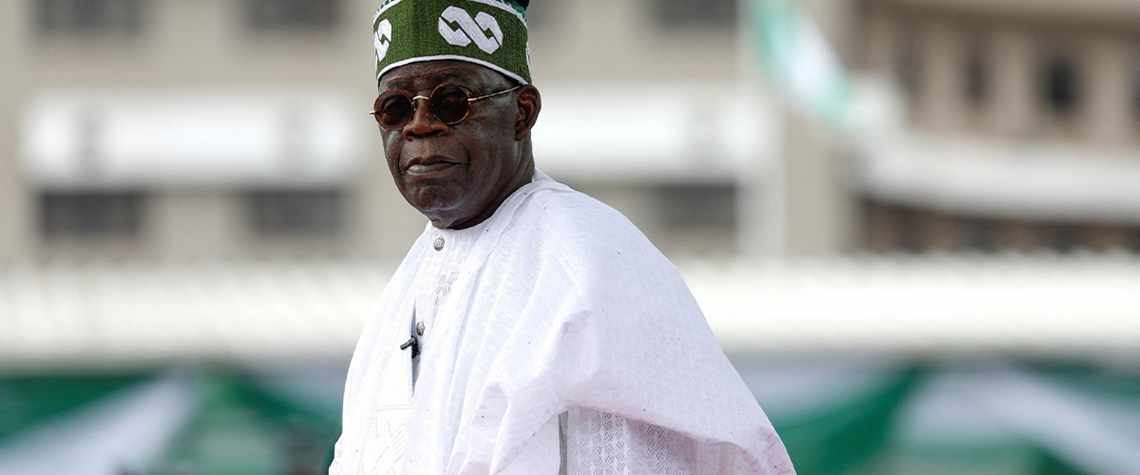
Nigerian president Bola Tinubu
Letter from Nigeria: New leader delivers shock therapy
President Tinubu has already targeted major reforms at the country’s dysfunctional downstream and upstream sectors, as well as overhauling monetary policy
Nigerians had low expectations of their new president, Bola Tinubu, who was elected with a record-low 36.61% of the vote in February. As co-founder of the All Progressives Congress party, which brought his predecessor Muhammadu Buhari to power in 2015, Tinubu was regarded as a continuity candidate, unlikely to deliver much-needed reform after eight years of sclerotic Buhari rule. However, Tinubu has made an immediate impact on Nigeria’s political economy, breaking the inertia that characterised Buhari’s tenure and upending the entire petroleum sector—starting with the downstream. Subsidy elimination Tinubu used his inauguration speech in May to end a nearly 50-year-old fuel subsidy. This had

Also in this section
21 April 2026
After overcoming a COVID-induced demand collapse with several years of successful market management, geopolitical events have conspired to provide the pact’s biggest test to date
21 April 2026
The regime’s policy of using nuclear ambiguity as a deterrent may have failed but it has realised it has other cards to play, while its neighbours are reappraising their approach to security
21 April 2026
As the global energy system undergoes a fundamental realignment, Algihaz Holdings has established itself as a critical player bridging conventional energy markets and the next generation of renewable infrastructure.
21 April 2026
The 25th WPC Energy Congress is taking place from 11-15 October 2026 at the Riyadh Front Exhibition & Conference Center.



