


Newsletters | Request Trial | Log in | Advertise | Digital Issue   |   Search
  • Upstream
  • Midstream & Downstream
  • Gas & LNG
  • Trading & Markets
  • Corporate & Finance
  • Geopolitics
  • Podcasts
Search
Related Articles
Energy dominance as diplomatic leverage
Energy sanctions are becoming an increasingly prominent tool of US foreign policy, with the country’s growth in oil and gas production allowing it to impose pressure on rivals without jeopardising its own energy security or that of its allies, argues Matthew McManus, a visiting fellow at the National Center for Energy Analytics
Explainer: Fujairah on high alert
With the Strait of Hormuz effectively closed following US-Israel strikes and Iran’s retaliatory escalation, Fujairah has become the region’s critical pressure release valve—and is now under serious threat
Middle East oil vulnerabilities have been exposed
The killing of Iran’s Supreme Leader Ayatollah Khamenei in US–Israeli strikes marks the most serious escalation in the region in decades and a bigger potential threat to the oil market than the start of the Russia-Ukraine crisis
HPI Market Data Book 2026: Global construction – Americas
Capex is concentrated in gas processing and LNG in the US, while in Canada the reverse is true
EU sanctions push stalls ahead of fourth anniversary of Russian invasion
As Europe marks the fourth anniversary of the Russia-Ukraine conflict, EU efforts to tighten sanctions on Moscow have stalled
Canadian producers positioned to ride out the downcycle
The country’s upstream players have demonstrated resilience to low oil prices and are well positioned to prosper despite a volatile market
Letter from Iran: Testing times for Tehran-Beijing crude dynamics
Growing pressure from the Trump administration continues to threaten a resilient China-Iran oil nexus
Explainer: Iran’s indispensable energy role
The country’s global energy importance and domestic political fate are interlocked, highlighting its outsized oil and gas powers, and the heightened fallout risk
Europe’s rising energy security challenge
Across Europe, countries have grappled with balancing ambitious energy transition plans with realities about security of supply
Venezuela’s true oil potential
The Latin American producer’s crude prospects rely on a multi-pronged approach where even the relatively easy wins will take considerable time, effort and cost
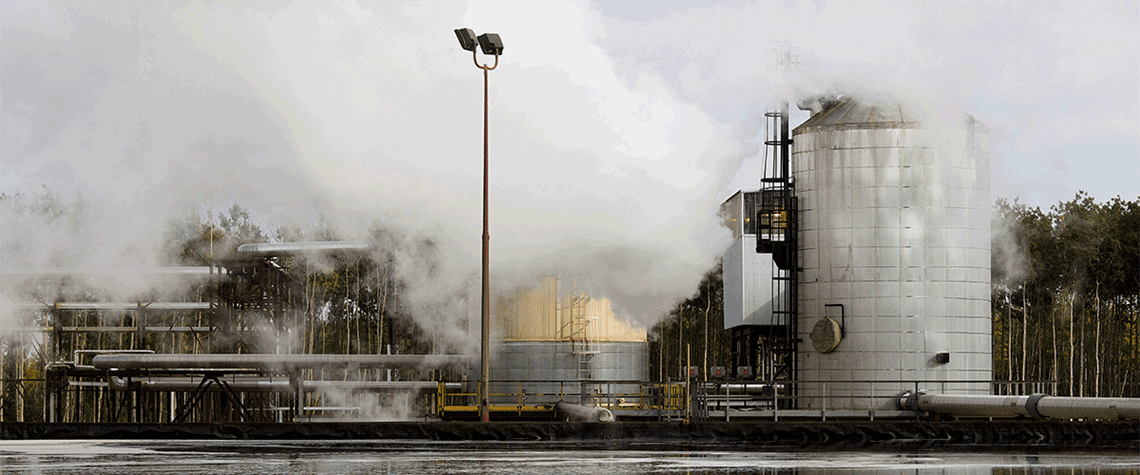
Water treatment pond at the McKay River Suncor oil sands
Opinion
Canada Politics IOCs
Vincent Lauerman
Calgary
9 May 2023
Follow @PetroleumEcon
Forward article link
Share PDF with colleagues

Letter from Canada: Oil sands return to domestic ownership

Continuing exodus of foreign companies means assets are coming back to Canadian-headquartered firms

Oil sands developer Suncor Energy’s agreement to acquire TotalEnergies’ Canadian assets in a C$5.5bn ($4.1bn) all-cash deal in late April was yet another step in the accidental return of the oil sands industry to domestic ownership since the second half of the last decade. The reasons for IOCs fleeing the world’s fourth-largest oil reserves have been primarily economic and environmental to date, with the former being a relatively important factor for US-based firms and the latter for Europe-headquartered ones. However, the primary reason for the next wave is likely to be geopolitical, with Chinese state oil companies now looking for the door. Western exodus Canada’s oil sands industry saw th

Also in this section
OPEC+ boosted production before crisis
9 March 2026
Petroleum Economist analysis sees increases in output from Saudi Arabia, Venezuela and Kazakhstan among others before region’s murky descent
Energy dominance as diplomatic leverage
9 March 2026
Energy sanctions are becoming an increasingly prominent tool of US foreign policy, with the country’s growth in oil and gas production allowing it to impose pressure on rivals without jeopardising its own energy security or that of its allies, argues Matthew McManus, a visiting fellow at the National Center for Energy Analytics
Petroleum Economist: March 2026
6 March 2026
The March 2026 issue of Petroleum Economist is out now!
Next wave of floating LNG growth in developing markets
6 March 2026
After Europe’s rapid buildout of floating LNG import capacity, Exmar CEO Carl-Antoine Saverys says future growth in floating gas infrastructure will increasingly be driven by developing markets as lower prices, rising energy demand and the need to replace coal unlock new opportunities for unconventional and tailor-made solutions

Share PDF with colleagues

COPYRIGHT NOTICE: PDF sharing is permitted internally for Petroleum Economist Gold Members only. Usage of this PDF is restricted by <%= If(IsLoggedIn, User.CompanyName, "")%>’s agreement with Petroleum Economist – exceeding the terms of your licence by forwarding outside of the company or placing on any external network is considered a breach of copyright. Such instances are punishable by fines of up to US$1,500 per infringement
Send

Forward article Link

Send
Sign Up For Our Newsletter
Project Data
Maps
Podcasts
Social Links
Featured Video
Home
  • About us
  • Subscribe
  • Reaching your audience
  • PE Store
  • Terms and conditions
  • Contact us
  • Privacy statement
  • Cookies
  • Sitemap
All material subject to strictly enforced copyright laws © 2025 The Petroleum Economist Ltd
Cookie Settings
;

Search


