


Newsletters | Request Trial | Log in | Advertise | Digital Issue   |   Search
  • Upstream
  • Midstream & Downstream
  • Gas & LNG
  • Trading & Markets
  • Corporate & Finance
  • Geopolitics
  • Podcasts
Search
Related Articles
MENA states try to change their gas fortunes
While Syria has gas import plans and Jordan is targeting greater production, Egypt is struggling with declining output and Lebanon with the after-effects of conflict
Libya’s NOC sees E&P optimism through the anger
North African producer hopeful of bringing in IOCs despite the disagreements over terms as latest bidding round is launched
Hydrocarbon Processing Refining Databook 2025: Middle East & Africa
The Middle East is focusing on modernisation and expansion projects, while Africa is seeking to reduce its imports of refined products
Libya’s armed oil industry takeover
Booming crude production has been met with international caution after the UN’s damning assessment
Iran and Libya supply fortunes highlight market risks
The impact from Libya’s lost barrels versus the threats to Iranian supply highlight the type of buffer in the oil market and the demand implications
Chaos the new normal for Libya’s oil sector
Hopes for a recovery by the North African oil producer remain in tatters
Outlook 2024: Libya ready for investment
New strategic plan includes significant investment in oil and gas
Libya’s upstream promise still hamstrung by instability
But the troubled north African nation is not short of international investment interest
Libya targets 2m b/d oil before 2030
Oil minister Oun sends out cautiously optimistic message on oil and gas outlook and says pilot project ready to unlock huge shale reserves key to further growth
Explorers return to Libya despite fragile security
Peace means progress for Libya’s upstream, but disruption is never far away
Libya Eni
Rhiannon Smith
27 December 2019
Follow @PetroleumEcon
Forward article link
Share PDF with colleagues

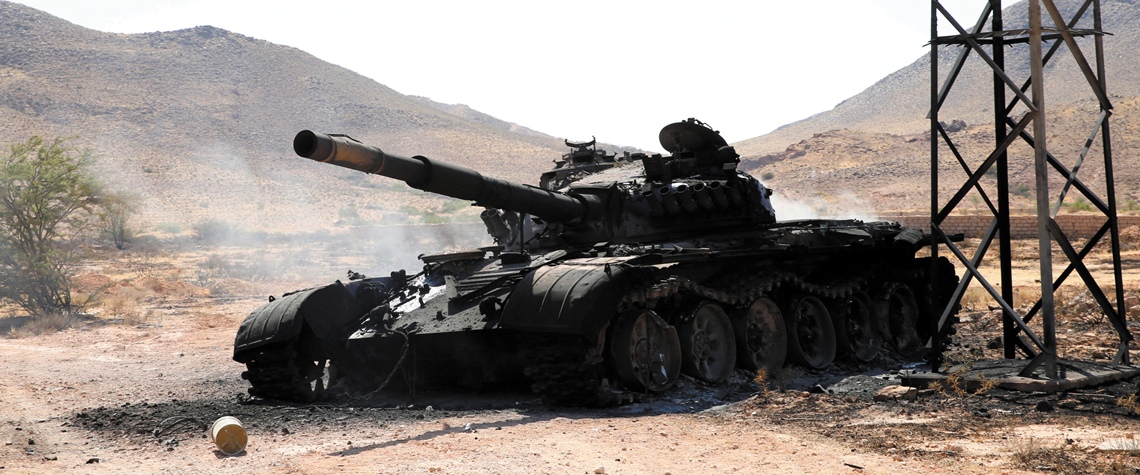
Conflict threatens Libyan oil sector’s long-term stability

Civil war endangers the state-owned oil company’s ability to maintain crude production and threatens the collapse of the entire sector

The polarising conflict that has left a trail of bombed out buildings, civilian casualties, and broken trust across Tripoli and western Libya since April shows no sign of letting up.  Forces under the so-called Libyan National Army (LNA) led by Khalifa Haftar keep trying to push forward along frontlines south of the capital while forces opposed to the LNA’s assault, operating under the umbrella of the internationally-recognised Government of National Accord (GNA), keep pushing back.  Both sides are heavily reliant on foreign support, particularly arms, ammunition and drones, to maintain their operations. But attempts to curtail foreign interference have failed to gain traction, suggesting th

Also in this section
Germany under pressure to solve Rosneft refinery problem
7 November 2025
The Russian company’s German assets are under Berlin’s management and are exempt from sanctions, for now, but a permanent solution still needs to be found
Lukoil loses its growth prospects
6 November 2025
The Russian firm made a significant attempt to expand overseas over the past two decades but is now divesting its global operations
Letter from Europe: Western retreat raises doubts over climate leadership
Opinion
6 November 2025
After years of pursuing ideologically driven climate leadership, Western powers are now stepping back under mounting political pressure and rising populist opposition—prompting concern essential climate action could be sidelined
Turkmenistan's pipe dream
5 November 2025
Construction of the pipeline in Afghanistan is making tangible progress, but extending it into Pakistan and India remains unrealistic for political reasons

Share PDF with colleagues

COPYRIGHT NOTICE: PDF sharing is permitted internally for Petroleum Economist Gold Members only. Usage of this PDF is restricted by <%= If(IsLoggedIn, User.CompanyName, "")%>’s agreement with Petroleum Economist – exceeding the terms of your licence by forwarding outside of the company or placing on any external network is considered a breach of copyright. Such instances are punishable by fines of up to US$1,500 per infringement
Send

Forward article Link

Send
Sign Up For Our Newsletter
Project Data
Maps
Podcasts
Social Links
Featured Video
Home
  • About us
  • Subscribe
  • Reaching your audience
  • PE Store
  • Terms and conditions
  • Contact us
  • Privacy statement
  • Cookies
  • Sitemap
All material subject to strictly enforced copyright laws © 2025 The Petroleum Economist Ltd
Cookie Settings
;

Search


