


When power grows out of the oil barrel
Can the Gulf’s ruling families survive the post-oil era?
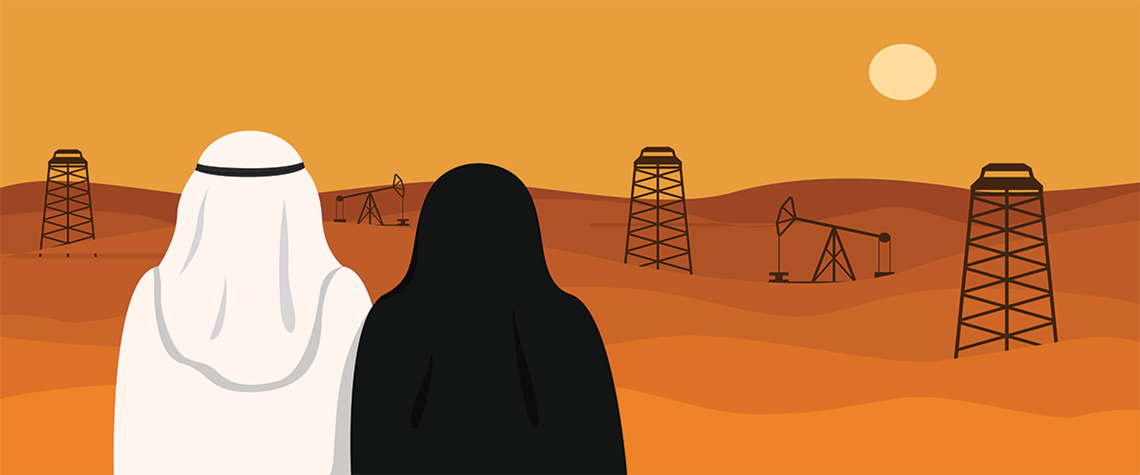
The brutal military crackdowns launched as the Arab Spring spread across Tunisia, Egypt, Libya, Bahrain and Yemen in 2011 contrasts sharply with the response most Gulf countries' leaderships took to the uprisings. Instead of soldiers, civil servants were more quietly deployed, armed with generous counter-revolutionary doles in the shape of cash and energy subsidies. Sweeping subsidies and targeted financial inducements—in some cases to the tune of as much as 4pc of GDP—quickly and bloodlessly placated populaces. But, as Jim Krane argues in Energy Kingdoms, the unspoken social contract on which this relies might not last forever. Having spent years in the region as a journalist, he crafts ins

Also in this section
21 April 2026
After overcoming a COVID-induced demand collapse with several years of successful market management, geopolitical events have conspired to provide the pact’s biggest test to date
21 April 2026
The regime’s policy of using nuclear ambiguity as a deterrent may have failed but it has realised it has other cards to play, while its neighbours are reappraising their approach to security
21 April 2026
As the global energy system undergoes a fundamental realignment, Algihaz Holdings has established itself as a critical player bridging conventional energy markets and the next generation of renewable infrastructure.
21 April 2026
The 25th WPC Energy Congress is taking place from 11-15 October 2026 at the Riyadh Front Exhibition & Conference Center.



