


Newsletters | Request Trial | Log in | Advertise | Digital Issue   |   Search
  • Upstream
  • Midstream & Downstream
  • Gas & LNG
  • Trading & Markets
  • Corporate & Finance
  • Geopolitics
  • Podcasts
Search
Related Articles
The looming risks of a US-Venezuela war
The Caribbean country’s role in the global oil market is significantly diminished, but disruptions caused by outright conflict would still have implications for US Gulf Coast refineries
Letter from Saudi Arabia: US-Saudi energy ties enter a new phase
Aramco’s pursuit of $30b in US gas partnerships marks a strategic pivot. The US gains capital and certainty; Saudi Arabia gains access, flexibility and a new export future
Letter from London: Oil’s golden triangle
The interplay between OPEC+, China and the US will define oil markets throughout 2026
The duality of US shale
A sector beset by pessimism and pain amid price weakness contrasts with data signalling production strength and resilience
Explainer: How the EU will wean itself off Russian gas
Questions remain about how the phase-out will be implemented and enforced in practice
Mideast states power up their gas priorities
Saudi Arabia, the UAE and Qatar are ploughing resources into gas—with a growing eye on facilitating domestic use in power and value-added sectors
Arctic LNG comes in from the cold
Beijing now appears prepared to accept discounted Russian LNG, even at the cost of heightened sanctions risk
MENA's gas metamorphosis
Across the Middle East and North Africa, gas is taking an enhanced role in helping build out economies that need to diversify away from crude oil dependence
Fear and loathing in US LNG buildout
Overall gas optimism is blighted by concerns over lingering regulatory and infrastructure hurdles that could hamper expansion of US LNG exports, weaken security and stifle AI ambitions
India’s LNG falling short
More needs to be done to meet the government’s ambitious targets for gas
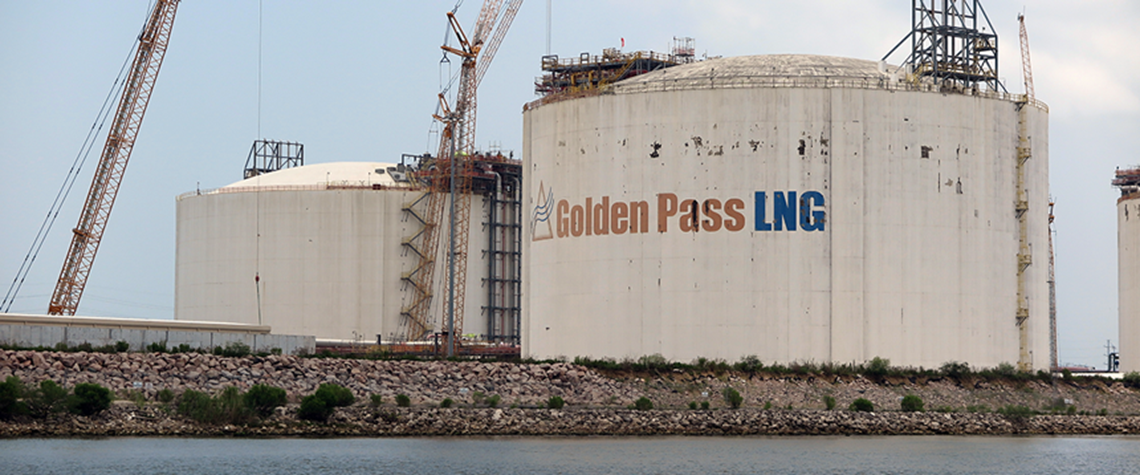
The Golden Pass LNG project
US LNG
Simon Ferrie
18 October 2023
Follow @PetroleumEcon
Forward article link
Share PDF with colleagues

US LNG expansion bolsters Europe, but risks remain

The US continues to play an increasingly pivotal role in the LNG market, but short- and medium-term risks and uncertainties persist

The US is the world’s largest LNG exporter, and that liquefied gas has become a lifeline for Europe since the Ukraine invasion and the resulting slump in Russian pipeline flows. Europe has successfully and rapidly built up its regasification infrastructure, but risks persist for this coming heating season. And the US’ role in the LNG market will only grow in the coming years, although the exact pace of capacity expansion remains open to debate. "The US will max out its LNG export capacity this winter,” said Ira Joseph, senior research associate at the Center on Global Energy Policy at Columbia University, speaking at the recent Petroleum Economist webcast, ‘US LNG ambitions reforging the glo

Also in this section
New Zealand’s gas horror story will haunt for years to come
10 December 2025
The economic and environmental cost of the seven-year exploration ban will be felt long after its removal
OPEC presses pause
9 December 2025
The group’s oil production declined in November, our latest analysis finds, amid divided sentiment over market balances and geopolitical jitters
The looming risks of a US-Venezuela war
8 December 2025
The Caribbean country’s role in the global oil market is significantly diminished, but disruptions caused by outright conflict would still have implications for US Gulf Coast refineries
Learning from oil’s supercycle miss
5 December 2025
Mistaken assumptions around an oil bull run that never happened are a warning over the talk of a supply glut

Share PDF with colleagues

COPYRIGHT NOTICE: PDF sharing is permitted internally for Petroleum Economist Gold Members only. Usage of this PDF is restricted by <%= If(IsLoggedIn, User.CompanyName, "")%>’s agreement with Petroleum Economist – exceeding the terms of your licence by forwarding outside of the company or placing on any external network is considered a breach of copyright. Such instances are punishable by fines of up to US$1,500 per infringement
Send

Forward article Link

Send
Sign Up For Our Newsletter
Project Data
Maps
Podcasts
Social Links
Featured Video
Home
  • About us
  • Subscribe
  • Reaching your audience
  • PE Store
  • Terms and conditions
  • Contact us
  • Privacy statement
  • Cookies
  • Sitemap
All material subject to strictly enforced copyright laws © 2025 The Petroleum Economist Ltd
Cookie Settings
;

Search


