


Newsletters | Request Trial | Log in | Advertise | Digital Issue   |   Search
  • Upstream
  • Midstream & Downstream
  • Gas & LNG
  • Trading & Markets
  • Corporate & Finance
  • Geopolitics
  • Podcasts
Search
Related Articles
The diesel crisis
By shutting the Strait of Hormuz, Iran has cut exports of distillate-rich Middle Eastern crude, jet fuel and diesel, and is holding the energy market hostage
Middle East oil vulnerabilities have been exposed
The killing of Iran’s Supreme Leader Ayatollah Khamenei in US–Israeli strikes marks the most serious escalation in the region in decades and a bigger potential threat to the oil market than the start of the Russia-Ukraine crisis
How Hormuz chokehold threatens LNG buyers
A potential blockade of the Strait of Hormuz following the escalating US-Iran conflict risks disrupting Qatari LNG exports that underpin global gas markets, exposing Asia and other markets to sharp price spikes, cargo shortages and renewed reliance on dirtier fuels
Letter from Iran: Testing times for Tehran-Beijing crude dynamics
Growing pressure from the Trump administration continues to threaten a resilient China-Iran oil nexus
Explainer: Iran’s indispensable energy role
The country’s global energy importance and domestic political fate are interlocked, highlighting its outsized oil and gas powers, and the heightened fallout risk
The curious case of oil-on-water
The market is facing being drowned in excess crude, but one caveat is that a large chunk is due to buyers reluctant to snap up sanctioned barrels
MENA states sharpen their gas focus
The GCC countries and other states in the region are looking to make greater domestic use of gas, both that produced at home and imported volumes
Letter from the Middle East: Iran-Israel war risks dire straits
A blockade of the Strait of Hormuz would have reverberations that would sound around the world
Israel-Iran war imperils Egypt’s energy supply
Egypt’s government was already preparing for potential energy shortages this summer, and the loss of Israeli gas supply has made things worse
The oil risk premium fable
Israel’s attack on Iran caught oil firms with low inventories due to their efforts to protect themselves from falling prices, creating a perfect storm
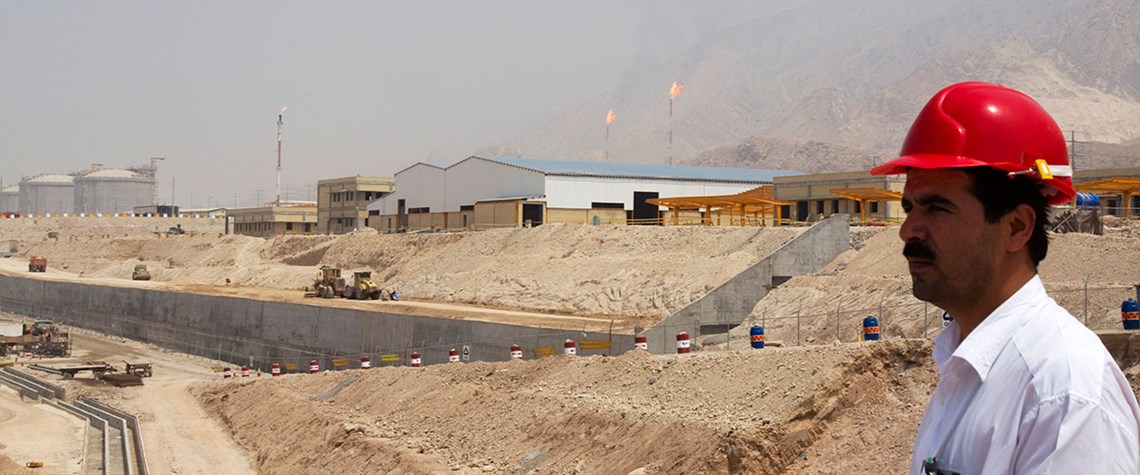
Security at the South Pars Special Economic Energy Zone in Asalouyeh
Iran
Ian Simm
17 May 2021
Follow @PetroleumEcon
Forward article link
Share PDF with colleagues

South Pars looks to the long term

With the 38 phases associated with Iran’s South Pars gas field nearing completion, focus has shifted to maintaining production stability amid pressure concerns

Total cumulative output from Iran’s supergiant South Pars gas field—the second and third phases of which came into production in 2002—is now around the 2tn m³ mark and has increased rapidly in recent years. Earlier this year, President Hassan Rouhani said production from the 23 upstream projects already in operation had reached 750mn m³/d, up from 280mn m³/d in 2013. With state oil firm NIOC aiming to reach 1bn m³/d as quickly as possible, a drilling campaign is ongoing at the offshore Phase 11 (SP11). Total and China’s CNPC signed a contract for SP11 in 2017, before pulling out after the US withdrew from the Iranian nuclear deal a year later. 9tn m³ – Remaining South Pars recover

Also in this section
Trump’s bid to reshape the global energy order
10 March 2026
From Venezuela to Hormuz, the US—backed by the most powerful military force ever assembled—is redrawing not only oil and gas flows but also the global balance of energy power
The diesel crisis
10 March 2026
By shutting the Strait of Hormuz, Iran has cut exports of distillate-rich Middle Eastern crude, jet fuel and diesel, and is holding the energy market hostage
Navigating the next LNG cycle
10 March 2026
Eni’s director for global gas and LNG portfolio, Cristian Signoretto, discusses how demand will respond to rising LNG supply, and how the company is expanding its own gas and LNG operations through disciplined, capital-efficient investments
OPEC+ boosted production before crisis
9 March 2026
Petroleum Economist analysis sees increases in output from Saudi Arabia, Venezuela and Kazakhstan among others before region’s murky descent

Share PDF with colleagues

COPYRIGHT NOTICE: PDF sharing is permitted internally for Petroleum Economist Gold Members only. Usage of this PDF is restricted by <%= If(IsLoggedIn, User.CompanyName, "")%>’s agreement with Petroleum Economist – exceeding the terms of your licence by forwarding outside of the company or placing on any external network is considered a breach of copyright. Such instances are punishable by fines of up to US$1,500 per infringement
Send

Forward article Link

Send
Sign Up For Our Newsletter
Project Data
Maps
Podcasts
Social Links
Featured Video
Home
  • About us
  • Subscribe
  • Reaching your audience
  • PE Store
  • Terms and conditions
  • Contact us
  • Privacy statement
  • Cookies
  • Sitemap
All material subject to strictly enforced copyright laws © 2025 The Petroleum Economist Ltd
Cookie Settings
;

Search


