


Newsletters | Request Trial | Log in | Advertise | Digital Issue   |   Search
  • Upstream
  • Midstream & Downstream
  • Gas & LNG
  • Trading & Markets
  • Corporate & Finance
  • Geopolitics
  • Podcasts
Search
Related Articles
South Korea’s transition bottlenecks keep LNG in play
The country’s new government has grand plans for renewables, but the structural changes needed for these policies will take years to carry out
Asian demand critical to absorb fresh LNG supply
Purchasing from region will help determine if prices will stay buoyant in the second half of this decade as supply increases, with significant volumes due online in the next three years
Weather and pricing key to Asia’s winter LNG demand
Nuclear availability in Japan and South Korea will also be an important factor in determining overall LNG requirements
Muddled policies cloud Korean LNG outlook
Planned terminal expansions do not fit with Seoul’s stated goals of trimming LNG dependence
Muted winter LNG outlook for NE Asia
Seasonal temperatures will prove critical, but the LNG demand prospects for China, Japan and South Korea are currently soft
East Asian LNG demand may not threaten Europe
Risks persist, particularly those related to weather, which could tighten gas availability for Europe
South Korea doubles down on Saudi crude
Seoul dabbles with Russian and US crude but Middle East remains primary source
LNG crucial for South Korea despite nuclear focus
Liquefied gas may lose market share to nuclear in South Korea, but demand could still be robust
Low prices not luring Asian buyers back to LNG
Preferable nuclear and coal options suggest balanced Asian LNG market, at least over the summer
Subdued Asian LNG interest produces large stockpiles
Weak prices support demand but mild weather, delayed gas projects, large reserves and nuclear alternatives set to blunt upturn
Strong orders have left shipyards with little additional capacity
Tankers South Korea
Shi Weijun
9 September 2021
Follow @PetroleumEcon
Forward article link
Share PDF with colleagues

LNG shipbuilding capacity to tighten

Shipyards are nearing their limits due to strong demand for carriers

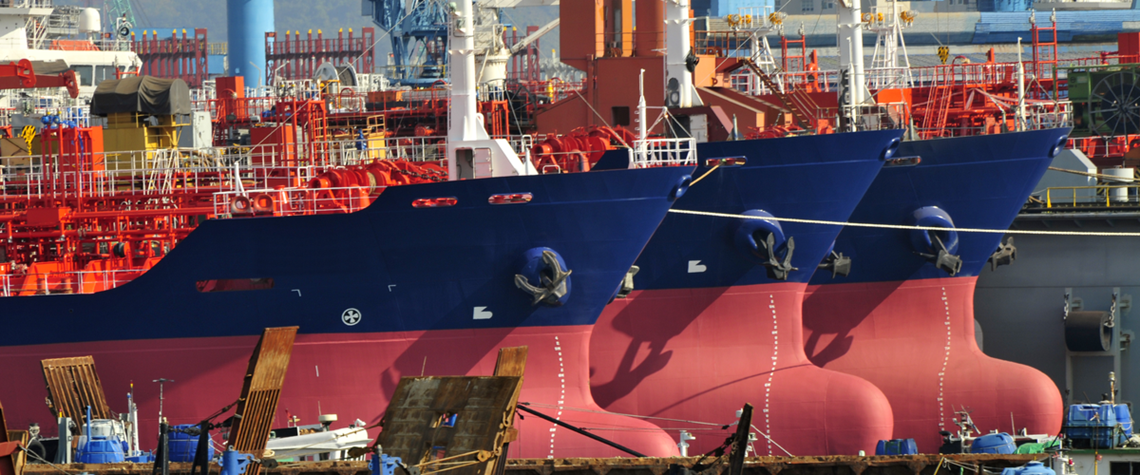
Global shipbuilding capacity for large LNG carriers could face a crunch in the coming years following a deluge of orders in recent months from buyers keen to lock in slots at shipyards. Companies placed a total of 38 orders for newbuild LNG tankers with a capacity of at least 140,000m³ in the first eight months of this year, according to Clarksons, the world’s largest shipbroker. This compares with last year’s 55 orders, which was nearly level with 2019 and 2018. LNG carrier deliveries have been robust throughout this year, with on average approaching five new vessels delivered every month in the first seven months of 2021. 38—LNG carrier orders in 2021 Twenty-four conventional LNG

Also in this section
Learning from oil’s supercycle miss
5 December 2025
Mistaken assumptions around an oil bull run that never happened are a warning over the talk of a supply glut
Explainer: What do Russia’s oil giants own overseas?
4 December 2025
Time is running out for Lukoil and Rosneft to divest international assets that will be mostly rendered useless to them when the US sanctions deadline arrives in mid-December
Letter from Saudi Arabia: US-Saudi energy ties enter a new phase
Opinion
3 December 2025
Aramco’s pursuit of $30b in US gas partnerships marks a strategic pivot. The US gains capital and certainty; Saudi Arabia gains access, flexibility and a new export future
Letter from London: Oil’s golden triangle
Opinion
2 December 2025
The interplay between OPEC+, China and the US will define oil markets throughout 2026

Share PDF with colleagues

COPYRIGHT NOTICE: PDF sharing is permitted internally for Petroleum Economist Gold Members only. Usage of this PDF is restricted by <%= If(IsLoggedIn, User.CompanyName, "")%>’s agreement with Petroleum Economist – exceeding the terms of your licence by forwarding outside of the company or placing on any external network is considered a breach of copyright. Such instances are punishable by fines of up to US$1,500 per infringement
Send

Forward article Link

Send
Sign Up For Our Newsletter
Project Data
Maps
Podcasts
Social Links
Featured Video
Home
  • About us
  • Subscribe
  • Reaching your audience
  • PE Store
  • Terms and conditions
  • Contact us
  • Privacy statement
  • Cookies
  • Sitemap
All material subject to strictly enforced copyright laws © 2025 The Petroleum Economist Ltd
Cookie Settings
;

Search


