


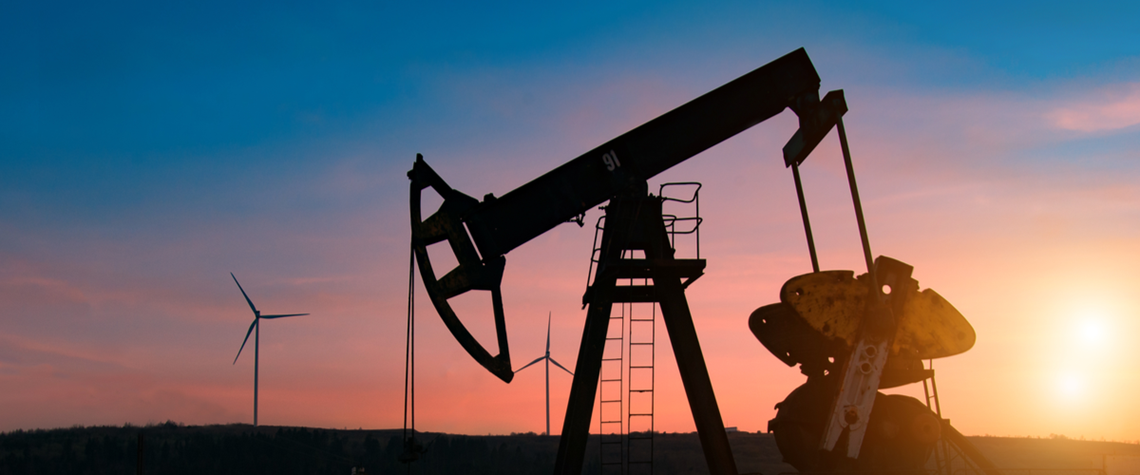
Oil majors are adopting various strategies for the energy transition
Outlook 2022: The future of oil majors in the energy transition
The big oil and gas companies are faced with the prospect of losing a large part of their market as the world transitions away from fossil fuels. Can they carve out a positive role for themselves?
Oil supply will increase by 6pc by 2030 under stated government policies, but decline by 27pc in a scenario leading to net zero by 2050, according to the IEA. For gas, the figures are plus 10pc and minus 9pc. That is a wide range of uncertainty. And stated government policies would require an investment of nearly $700bn/yr in upstream oil from 2030—well above current levels—whereas on the net-zero-by-2050 trajectory there will be no need for investment in new fields. With reasonable optimism about global progress in converting to clean energy, a tipping point will eventually occur when prices will decline closer to the production costs of the lowest-cost fields, mainly in Opec countries. Tha

Also in this section
21 April 2026
After overcoming a COVID-induced demand collapse with several years of successful market management, geopolitical events have conspired to provide the pact’s biggest test to date
21 April 2026
The regime’s policy of using nuclear ambiguity as a deterrent may have failed but it has realised it has other cards to play, while its neighbours are reappraising their approach to security
21 April 2026
As the global energy system undergoes a fundamental realignment, Algihaz Holdings has established itself as a critical player bridging conventional energy markets and the next generation of renewable infrastructure.
21 April 2026
The 25th WPC Energy Congress is taking place from 11-15 October 2026 at the Riyadh Front Exhibition & Conference Center.



