


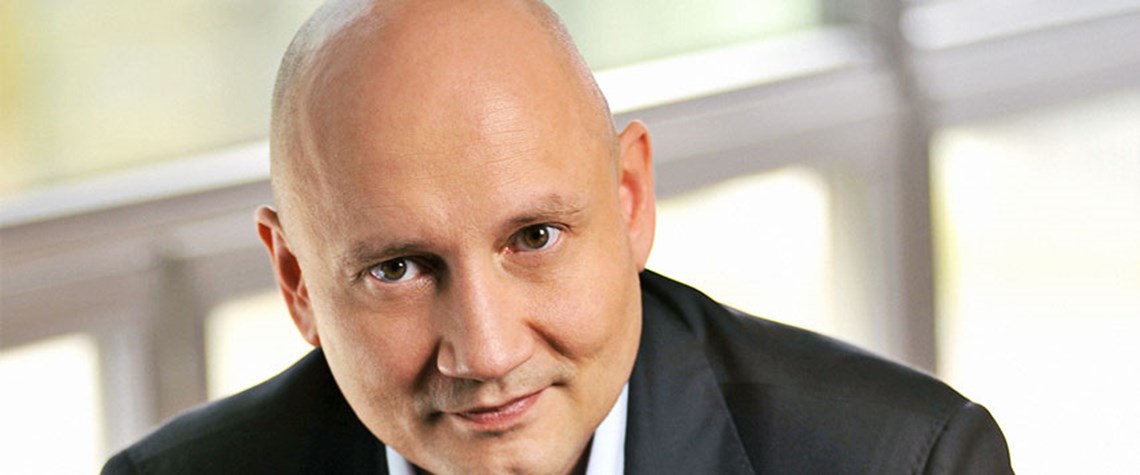
Mol upstream chief Berislav Gaso
Mol’s upstream positions for the long term
The oil and gas division wants a role beyond just providing cash for the group to pivot to lower-carbon alternatives
Hungary’s Mol has laid out a three-pronged approach to its 2030+ strategy of moving “profitably towards net zero”. But the three pillars—sustainable fuels, consumer convenience and mobility and the circular economy—leave, at first glance, little scope for its previously core oil and gas production activities. So will upstream revenues simply be used to fund the pivot to lower-carbon businesses? Or is there still a key role for hydrocarbons—albeit, in the future, decarbonised through carbon capture and storage—in Mol’s longer-term activities? Petroleum Economist spoke to Berislav Gaso, the firm’s executive vice president, upstream, to find out more. Is Mol’s upstream division just a short-t

Also in this section
21 April 2026
After overcoming a COVID-induced demand collapse with several years of successful market management, geopolitical events have conspired to provide the pact’s biggest test to date
21 April 2026
The regime’s policy of using nuclear ambiguity as a deterrent may have failed but it has realised it has other cards to play, while its neighbours are reappraising their approach to security
21 April 2026
As the global energy system undergoes a fundamental realignment, Algihaz Holdings has established itself as a critical player bridging conventional energy markets and the next generation of renewable infrastructure.
21 April 2026
The 25th WPC Energy Congress is taking place from 11-15 October 2026 at the Riyadh Front Exhibition & Conference Center.



