


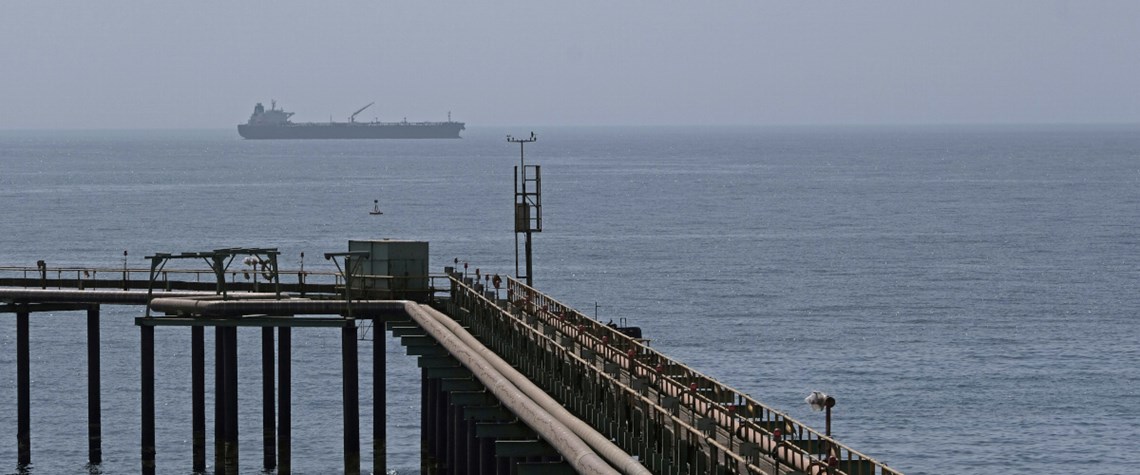
A tanker leaving Libya's Zueitina oil terminal
Libya scrambles to protect output recovery
The Tripoli administration moves against its own central bank to try to prevent another blockade
Crisis-torn Libya has taken the unprecedented step of denying its own central bank access to oil income. The move seeks to safeguard the country’s faster-than-expected oil production recovery amid concerns that eastern general Khalifa Haftar will re-impose an oil-targeted blockade. Haftar, whose Libyan National Army controls the bulk of oil facilities, lifted eight-month restrictions on fields and ports—that had depressed output to c.90,000bl/d—in late September on condition that a new commission is formed to decide how oil revenues are spent. Since then, output has ramped up faster than most analysts predicted, returning this month to its pre-blockade level of 1.2mn bl/d. But that progress

Also in this section
1 April 2026
Golden Pass’s startup offers QatarEnergy a timely boost but may also force a difficult choice between honouring disrupted contracts and capitalising on soaring spot LNG prices
1 April 2026
It is not a case of if or when, but the length and magnitude of economic damage from elevated oil prices
1 April 2026
The US-Iran conflict demonstrates the need for diversification in several senses of the word. It also exposes the limits of Washington applying pressure on major oil and gas producers it considers geopolitical adversaries
31 March 2026
Disappointing results in its bidding round are a reality check for Libya, and global exploration generally



