


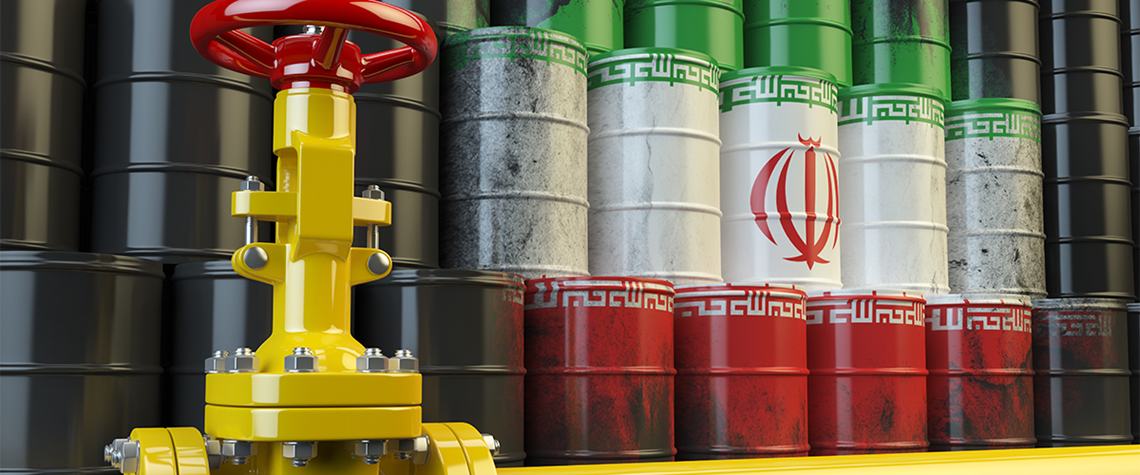
US sanctions have made Iran increasingly creative in finding outlets for its mainly heavy sour crude
Iran’s crude increases raise US, OPEC+ questions
A tight sour oil market and a reluctance by Washington to take a hard line could allow the OPEC producer to keep testing boundaries, but for how long?
Iranian oil minister Javad Owji told reporters at the OPEC seminar in Vienna in early July that his country’s crude output had crept above the 3m b/d mark. While this means the sanctions-hit producer is still c.800,000b/d shy of its capacity, it also shows crude output is at its highest in five years. The OPEC member, which is exempt from production cuts, is no longer in the shadows. At various points in the past few years there has been hope that Iran and the US would strike some kind of nuclear deal that would allow for an end to sanctions. Recent diplomatic activity has rekindled hope of a return to the agreement of 2015, when Iran was producing in excess of 3.80m b/d and jostling with Ir

Also in this section
1 April 2026
Golden Pass’s startup offers QatarEnergy a timely boost but may also force a difficult choice between honouring disrupted contracts and capitalising on soaring spot LNG prices
1 April 2026
It is not a case of if or when, but the length and magnitude of economic damage from elevated oil prices
1 April 2026
The US-Iran conflict demonstrates the need for diversification in several senses of the word. It also exposes the limits of Washington applying pressure on major oil and gas producers it considers geopolitical adversaries
31 March 2026
Disappointing results in its bidding round are a reality check for Libya, and global exploration generally



