


Newsletters | Request Trial | Log in | Advertise | Digital Issue   |   Search
  • Upstream
  • Midstream & Downstream
  • Gas & LNG
  • Trading & Markets
  • Corporate & Finance
  • Geopolitics
  • Podcasts
Search
Related Articles
Letter from Asia: The nuanced India-Russia oil picture
The South Asian consumer’s next move could tighten the Middle East oil market overnight
Indian refiners prove their adaptability
A strategic pivot away from Russian crude in recent weeks tees up the possibility of improved US-India trade relations
India’s refining project strengthens ties to Mongolia
The Central Asian country’s first oil refinery is being funded by a $1.7b line of credit from New Delhi, but routes in and out of the country remain controlled by Russia and China
Turkmenistan's pipe dream
Construction of the pipeline in Afghanistan is making tangible progress, but extending it into Pakistan and India remains unrealistic for political reasons
India’s LNG falling short
More needs to be done to meet the government’s ambitious targets for gas
India’s retreat from Russian oil could cause global trade flow shockwaves
US secondary sanctions are forcing a rapid reassessment of crude buying patterns in Asia, and the implications could reshape pricing, freight and supply balances worldwide. With India holding the key to two-thirds of Russian seaborne exports, the stakes could not be higher
Difficult times for Germany’s downstream
Europe’s refining sector is desperately trying to adapt to a shifting global energy landscape and nowhere is this more apparent than in its largest economy
India’s Nayara fallout
The EU’s Russia sanctions could have far-reaching implications for India’s Vadinar-based refinery
India ready for turbulent times
The country’s energy minister explains in an exclusive interview how the country is taking a pragmatic and far-sighted approach to energy security and why he has great confidence in its oil sector
India to help Asia spearhead global refining
Shifting demand patterns leaves most populous nation primed to become downstream leader as China and the West retreat
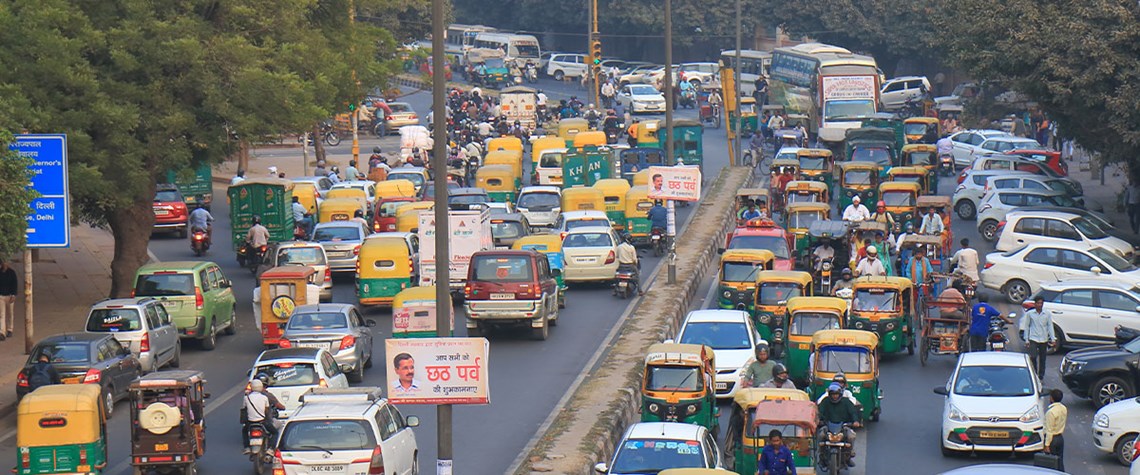
The transport sector is the largest oil consumer in India
India Oil markets
Yogender Malik
New Delhi
20 October 2022
Follow @PetroleumEcon
Forward article link
Share PDF with colleagues

No imminent slowdown in Indian oil demand growth

The country’s increasing thirst for oil is unlikely to be blunted by planned gas use expansion or the energy transition

India is the world’s third‐largest consumer of energy, with a 5.7pc share of global primary energy use. The combination of a huge population, rising urbanisation, growing incomes and improving living standards for large numbers of people has seen energy use double since 2000. Nor is its appetite for oil set to moderate any time soon, despite rhetoric on a cleaner future energy mix Coal, petroleum products and solid biomass meet nearly 80pc of the country’s energy demand, with oil second only to coal. India is likely to remain among fastest-growing energy consumers in the coming years, and oil, as well as gas, will play a significant role in the country’s expanding energy mix in the short and

Also in this section
The diesel crisis
10 March 2026
By shutting the Strait of Hormuz, Iran has cut exports of distillate-rich Middle Eastern crude, jet fuel and diesel, and is holding the energy market hostage
Navigating the next LNG cycle
10 March 2026
Eni’s director for global gas and LNG portfolio, Cristian Signoretto, discusses how demand will respond to rising LNG supply, and how the company is expanding its own gas and LNG operations through disciplined, capital-efficient investments
OPEC+ boosted production before crisis
9 March 2026
Petroleum Economist analysis sees increases in output from Saudi Arabia, Venezuela and Kazakhstan among others before region’s murky descent
Energy dominance as diplomatic leverage
9 March 2026
Energy sanctions are becoming an increasingly prominent tool of US foreign policy, with the country’s growth in oil and gas production allowing it to impose pressure on rivals without jeopardising its own energy security or that of its allies, argues Matthew McManus, a visiting fellow at the National Center for Energy Analytics

Share PDF with colleagues

COPYRIGHT NOTICE: PDF sharing is permitted internally for Petroleum Economist Gold Members only. Usage of this PDF is restricted by <%= If(IsLoggedIn, User.CompanyName, "")%>’s agreement with Petroleum Economist – exceeding the terms of your licence by forwarding outside of the company or placing on any external network is considered a breach of copyright. Such instances are punishable by fines of up to US$1,500 per infringement
Send

Forward article Link

Send
Sign Up For Our Newsletter
Project Data
Maps
Podcasts
Social Links
Featured Video
Home
  • About us
  • Subscribe
  • Reaching your audience
  • PE Store
  • Terms and conditions
  • Contact us
  • Privacy statement
  • Cookies
  • Sitemap
All material subject to strictly enforced copyright laws © 2025 The Petroleum Economist Ltd
Cookie Settings
;

Search


