


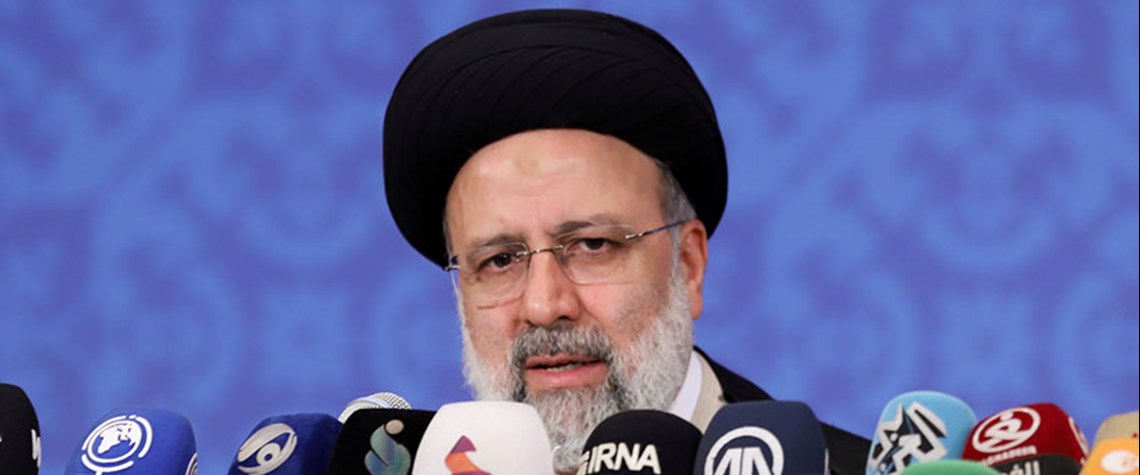
Iranian president Ebrahim Raisi at a news conference
Economic realities may force Iran to the table
Hardline rhetoric and positions apparently further apart than ever may obscure appetite for a deal
Iran and the P5+1—the US, the UK, France, China, Russia and Germany—remain no closer to a nuclear deal after six rounds of talks. It is difficult not to feel that previous cautious optimism may be ebbing away as we enter a seventh round. The key question, though, may be whether Iran can afford not to reach an agreement. The election of Ebrahim Raisi, mooted as a potential successor to the ailing 82-year-old supreme leader Ayatollah Ali Khamenei, has ushered in a new period in Iranian politics. Unsurprisingly, the alignment of conservative centres of power in Tehran has irked diplomats in Washington. Tit-for-tat tanker attacks in the Mid-East Gulf in recent weeks have also escalated—bringing

Also in this section
21 April 2026
After overcoming a COVID-induced demand collapse with several years of successful market management, geopolitical events have conspired to provide the pact’s biggest test to date
21 April 2026
The regime’s policy of using nuclear ambiguity as a deterrent may have failed but it has realised it has other cards to play, while its neighbours are reappraising their approach to security
21 April 2026
As the global energy system undergoes a fundamental realignment, Algihaz Holdings has established itself as a critical player bridging conventional energy markets and the next generation of renewable infrastructure.
21 April 2026
The 25th WPC Energy Congress is taking place from 11-15 October 2026 at the Riyadh Front Exhibition & Conference Center.



