


Newsletters | Request Trial | Log in | Advertise | Digital Issue   |   Search
  • Upstream
  • Midstream & Downstream
  • Gas & LNG
  • Trading & Markets
  • Corporate & Finance
  • Geopolitics
  • Podcasts
Search
Related Articles
Letter from Asia: The nuanced India-Russia oil picture
The South Asian consumer’s next move could tighten the Middle East oil market overnight
HPI Market Data Book 2026: Global construction – Americas
Capex is concentrated in gas processing and LNG in the US, while in Canada the reverse is true
HPI Market Data Book 2026: Global construction – Asia-Pacific
The surge in demand for fuel and petrochemical products in Asia has led to significant expansion in refining and petrochemicals capacities, with India and China leading the way
HPI Market Data Book 2026: Global construction – EMEA
Middle Eastern countries are investing in hydrocarbon processing to diversify their economies while African countries are looking to satisfy growing domestic fuel demand
HPI Market Data Book 2026: Global construction – Overview
Latest edition of our Gulf Energy Information's Market Data Book highlights robust growth in gas processing/LNG sector, followed by petrochemicals and refining
EU sanctions push stalls ahead of fourth anniversary of Russian invasion
As Europe marks the fourth anniversary of the Russia-Ukraine conflict, EU efforts to tighten sanctions on Moscow have stalled
European gas faces renewed strain after winter drawdowns
Sustained low temperatures have depleted storage levels and exposed the EU’s vulnerability to shocks even as the bloc moves ahead with phasing out all Russian imports
Dangote: Big ambitions, harsh realities
Nigeria's mega-refinery is still trying to solve many challenges, all while its owner talks up expansion
Arctic LNG 2 adds Arc7 to its shadow fleet
Having found a steady buyer in China for its sanctioned gas, the Russian project is positioned for nearly year-round operations, yet its 11-vessel ‘shadow fleet’ is still insufficient to achieve anywhere near capacity utilisation.
Europe’s rising energy security challenge
Across Europe, countries have grappled with balancing ambitious energy transition plans with realities about security of supply
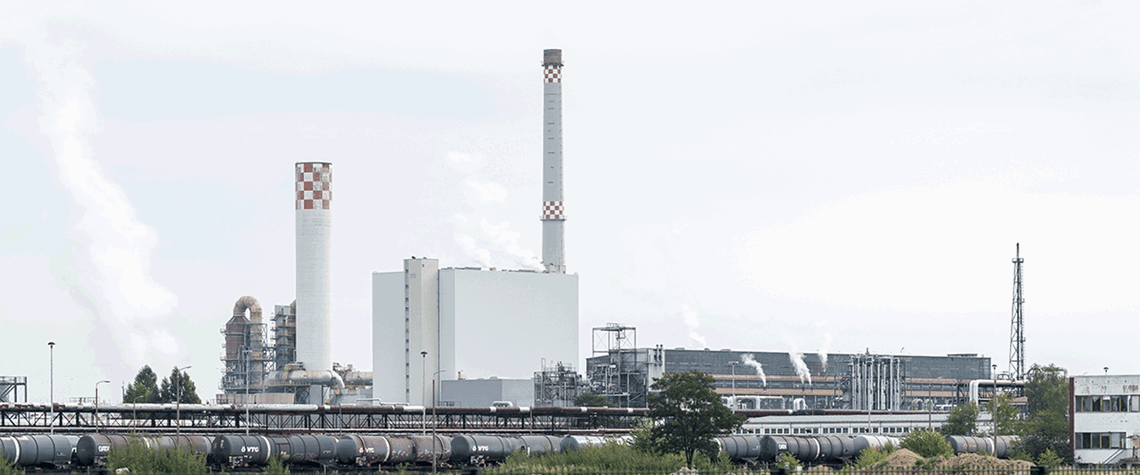
The Schwedt refinery
Russia EU Refining
Victor Kotsev
Sofia
2 February 2023
Follow @PetroleumEcon
Forward article link
Share PDF with colleagues

Russian firms exit Europe’s shrinking refining sector

Hampered by sanctions and ill will, Russian majors are departing Europe, but refiners’ focus was already moving east

Expropriations and sanctions are driving Russian oil companies out of Europe’s downstream. But despite significant bumps expected in the road ahead, it is probably for the best for both sides, experts say. The move fits with both Europe’s self-charted green course and Russia’s pivot to Asia. The trend started with Germany’s forced takeover of sanctioned Russian state oil giant Rosneft’s subsidiaries in the country in September 2022, including the latter’s shares in the Schwedt, Miro and Bayernoil refineries. Altogether, the units account for 12pc of Germany’s crude processing capability, or 250,000bl/d. More recently, the Italian government in January 2023 helped arrange the sale of Sicily’s

Also in this section
OPEC+ boosted production before crisis
9 March 2026
Petroleum Economist analysis sees increases in output from Saudi Arabia, Venezuela and Kazakhstan among others before region’s murky descent
Energy dominance as diplomatic leverage
9 March 2026
Energy sanctions are becoming an increasingly prominent tool of US foreign policy, with the country’s growth in oil and gas production allowing it to impose pressure on rivals without jeopardising its own energy security or that of its allies, argues Matthew McManus, a visiting fellow at the National Center for Energy Analytics
Petroleum Economist: March 2026
6 March 2026
The March 2026 issue of Petroleum Economist is out now!
Next wave of floating LNG growth in developing markets
6 March 2026
After Europe’s rapid buildout of floating LNG import capacity, Exmar CEO Carl-Antoine Saverys says future growth in floating gas infrastructure will increasingly be driven by developing markets as lower prices, rising energy demand and the need to replace coal unlock new opportunities for unconventional and tailor-made solutions

Share PDF with colleagues

COPYRIGHT NOTICE: PDF sharing is permitted internally for Petroleum Economist Gold Members only. Usage of this PDF is restricted by <%= If(IsLoggedIn, User.CompanyName, "")%>’s agreement with Petroleum Economist – exceeding the terms of your licence by forwarding outside of the company or placing on any external network is considered a breach of copyright. Such instances are punishable by fines of up to US$1,500 per infringement
Send

Forward article Link

Send
Sign Up For Our Newsletter
Project Data
Maps
Podcasts
Social Links
Featured Video
Home
  • About us
  • Subscribe
  • Reaching your audience
  • PE Store
  • Terms and conditions
  • Contact us
  • Privacy statement
  • Cookies
  • Sitemap
All material subject to strictly enforced copyright laws © 2025 The Petroleum Economist Ltd
Cookie Settings
;

Search


