


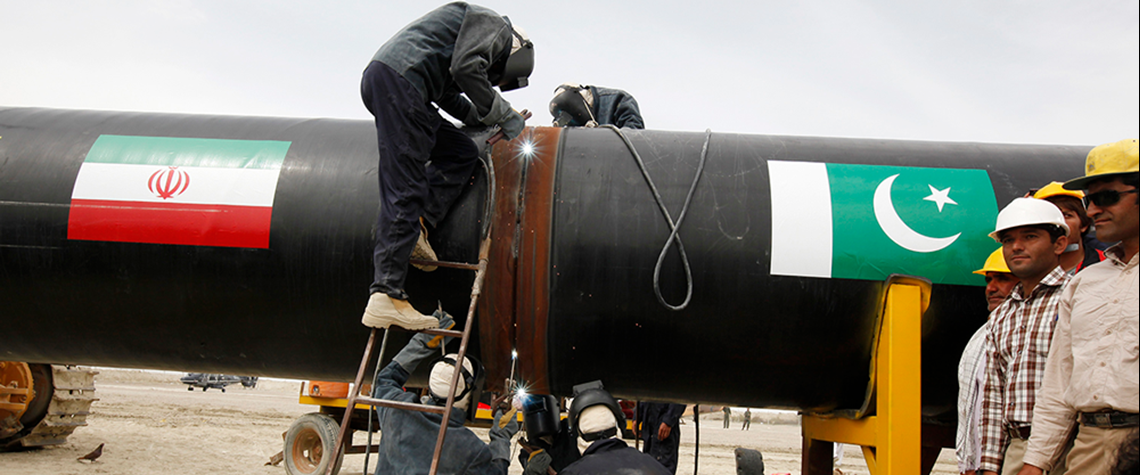
Work on the Iranian section of the IP pipeline in 2013
‘Peace pipeline’ appears dead
Fresh opposition from the US looks likely to be the final nail in the coffin for the long-delayed Iran-Pakistan connection
The Iran–Pakistan gas pipeline was seen by some, at least at times over the past couple of decades, as a project that would bring a measure of harmony to the relationship between the two shipping and receiving countries. However, the development has once again been shelved—this time apparently under US pressure. Dawn, a Pakistani news outlet, reported Pakistani officials as saying the government is unable to go forward with the pipeline as long as sanctions against Iran are in place—or until the US signals tacit approval of the project. The latter appears highly unlikely. Opposition from a foreign country has proved, over the years, to be less of an exception than a rule for the belea

Also in this section
1 April 2026
Golden Pass’s startup offers QatarEnergy a timely boost but may also force a difficult choice between honouring disrupted contracts and capitalising on soaring spot LNG prices
1 April 2026
It is not a case of if or when, but the length and magnitude of economic damage from elevated oil prices
1 April 2026
The US-Iran conflict demonstrates the need for diversification in several senses of the word. It also exposes the limits of Washington applying pressure on major oil and gas producers it considers geopolitical adversaries
31 March 2026
Disappointing results in its bidding round are a reality check for Libya, and global exploration generally



