


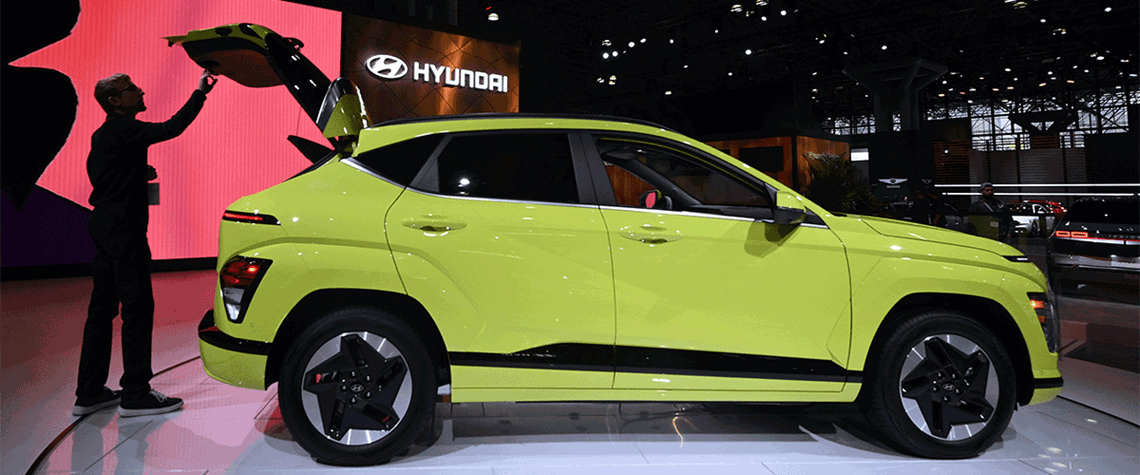
South Korea’s Hyundai Kona electric vehicle on display at the 2023 New York International Auto Show
Letter from the US: Biden calls time on petroleum-fuelled vehicles
Rules mandating EV sales will transform the US automotive industry, but there are significant practical and judicial challenges
The Biden administration introduced rules in mid-April mandating that electric vehicles (EVs) comprise 60pc of new US vehicles sold by 2030 and 67pc by 2032. The rules will essentially regulate internal combustion engine vehicles (ICEVs) out of business by being so stringent that car companies will not be able to comply. However, sales will likely fall well short of the administration’s targets, with the EIA forecasting that EVs’ share of US vehicle stocks will increase from 1pc in 2021 to only 9pc in 2050. And the regulation could create a host of problems unless technological progress makes EVs categorically cheaper and more convenient to use than their gasoline equivalents, prompting lawy

Also in this section
1 April 2026
Golden Pass’s startup offers QatarEnergy a timely boost but may also force a difficult choice between honouring disrupted contracts and capitalising on soaring spot LNG prices
1 April 2026
It is not a case of if or when, but the length and magnitude of economic damage from elevated oil prices
1 April 2026
The US-Iran conflict demonstrates the need for diversification in several senses of the word. It also exposes the limits of Washington applying pressure on major oil and gas producers it considers geopolitical adversaries
31 March 2026
Disappointing results in its bidding round are a reality check for Libya, and global exploration generally



