


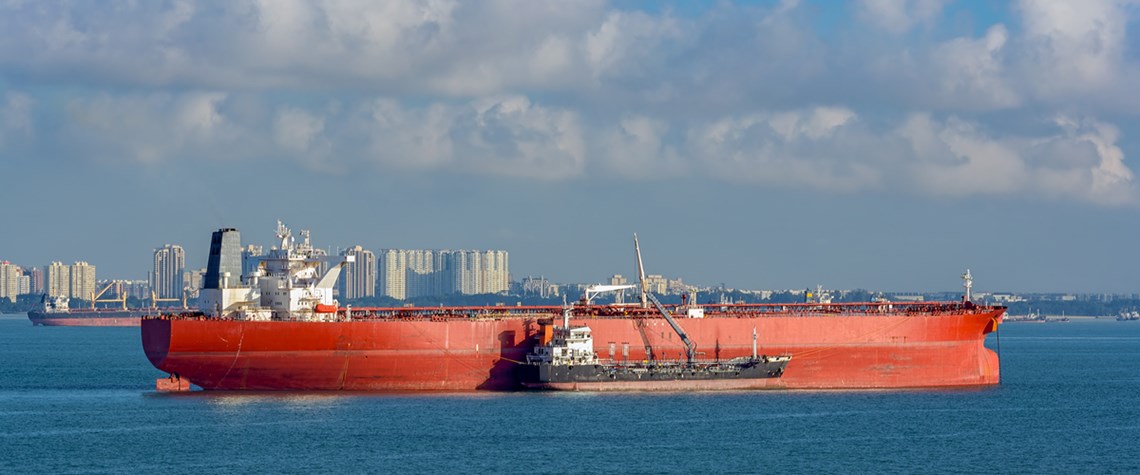
More change ahead for the shipping sector
An unwinding of some Covid-related effects might challenge VLSFO’s initial IMO 2020 win
It is easy to overlook, amid the fallout from and response to Covid-19, the seismic shift that fundamentally altered the global bunker industry over the last year. At the beginning of January, the permissible sulphur content of marine fuels was lowered from 3.5pc to 0.5pc, a seemingly small regulatory change with lasting implications across multiple industries. IMO 2020, as the regulation is known, has forever transformed the global bunker market, although many of the more dire expectations surrounding the regulation have been temporarily blunted by the market reaction to Covid-19. One year after its rollout, the bunker market remains in a precarious position. The new sulphur standard has s

Also in this section
1 April 2026
Golden Pass’s startup offers QatarEnergy a timely boost but may also force a difficult choice between honouring disrupted contracts and capitalising on soaring spot LNG prices
1 April 2026
It is not a case of if or when, but the length and magnitude of economic damage from elevated oil prices
1 April 2026
The US-Iran conflict demonstrates the need for diversification in several senses of the word. It also exposes the limits of Washington applying pressure on major oil and gas producers it considers geopolitical adversaries
31 March 2026
Disappointing results in its bidding round are a reality check for Libya, and global exploration generally



