


Newsletters | Request Trial | Log in | Advertise | Digital Issue   |   Search
  • Upstream
  • Midstream & Downstream
  • Gas & LNG
  • Trading & Markets
  • Corporate & Finance
  • Geopolitics
  • Podcasts
Search
Related Articles
LNG faces growing shipping constraints
New regulations are likely to restrict an already limited pool of vessels capable of transporting gas
Ukraine fallout continues to support tanker freight rates
Freight rates for clean tankers—the specialist vessels that transport refined petroleum products—reached multi-year highs in 2022 and are likely to remain strong going into 2023
Freight struggles with regulatory uncertainty
Lack of clarity is affecting demand for new tankers, but LNG vessel orders are booming
Russia-linked tankers ‘going dark’
Shipping analysts Windward see a rise in suspicious activity by Russia-affiliated vessels since start of Ukraine war
Market vagaries may still buffet merging tanker heavyweights
Frontline-Euronav deal will create one of the world’s largest tanker fleets, but price-setting power may remain outside the combination’s reach
Tanker market feels impact of Ukraine crisis
The tanker freight market is having to deal with sanctions, uncertainties and shifting trade flows in the aftermath of Russia’s invasion
Marine fuel market enters troubled waters
Ripple effect from Russia’s war in Ukraine may result in significant supply disruption
Decarbonising shipping: Where are we now?
Regulators have yet to force the sector to decarbonise, but larger shipping lines and operators are planning for a low-carbon future
Beyond buzzwords
Industry pioneer Cognite warns that digitalisation’s track record of over-promising and under-delivering threatens to overshadow its huge potential to transform oil and gas
Data-based decisions require AI at enterprise scale
Operational data is generated on a vast scale across the value chain every day but has yet to be fully exploited by predictive, analytical digital technologies
Robust cybersecurity on vessels and tankers is as important as onshore facilities
Shipping Cybersecurity Digitalisation
John Jorgensen
26 October 2021
Follow @PetroleumEcon
Forward article link
Share PDF with colleagues

Delivering an effective framework for cybersecurity

A systematic approach is key to creating a ship security programme and ensuring the crew are involved in its delivery

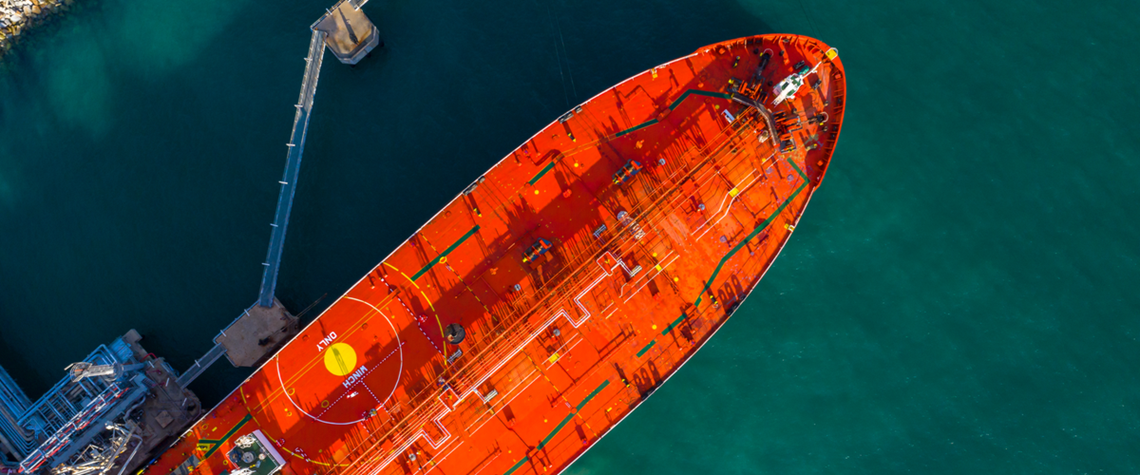
Cybersecurity is relevant to all fields that use digitally connected automation systems. Maritime asset operators understand the potential impacts of cyber incidents but may be unclear about how to proceed in such a seemingly complicated area. The best place to begin is with clear requirements—considering which systems or apparatus the ship has installed that may be considered cyber-relevant and in need of protection. A typical, relatively modern ship may have 20-40 automated systems onboard. Maritime asset operators understand the potential impacts of cyber incidents but may be unclear about how to proceed A significant number of onboard systems are capable of digital communications

Also in this section
Cheniere’s disciplined expansion
19 February 2026
US LNG exporter Cheniere Energy has grown its business rapidly since exporting its first cargo a decade ago. But Chief Commercial Officer Anatol Feygin tells Petroleum Economist that, as in the past, the company’s future expansion plans are anchored by high levels of contracted offtake, supporting predictable returns on investment
The new LNG wave is finally here
19 February 2026
Growth in LNG supply will surpass the rise in demand in 2026 for the first time in years, according to Mike Fulwood, senior research fellow at the OIES, but lower prices are likely to encourage fuel switching and could create more demand on a permanent basis
LNG trends in developing economies
19 February 2026
Awais Ali Butt, manager for sales and business development at Pakistan LNG Ltd, discusses LNG’s role in energy security across developing, price-sensitive economies, as well as examining trade-offs between buying strategies and the impact of lower prices and policy on import behaviour 
LNG remains frontrunner among low-carbon marine fuels
19 February 2026
LNG’s technical maturity, availability and price, as well as regulation, have driven its rapid adoption as a marine fuel, yet its future in shipping will depend on transition policies and progress in cutting methane emissions and scaling bio- and synthetic LNG, according to Carlos Guerrero at Bureau Veritas

Share PDF with colleagues

COPYRIGHT NOTICE: PDF sharing is permitted internally for Petroleum Economist Gold Members only. Usage of this PDF is restricted by <%= If(IsLoggedIn, User.CompanyName, "")%>’s agreement with Petroleum Economist – exceeding the terms of your licence by forwarding outside of the company or placing on any external network is considered a breach of copyright. Such instances are punishable by fines of up to US$1,500 per infringement
Send

Forward article Link

Send
Sign Up For Our Newsletter
Project Data
Maps
Podcasts
Social Links
Featured Video
Home
  • About us
  • Subscribe
  • Reaching your audience
  • PE Store
  • Terms and conditions
  • Contact us
  • Privacy statement
  • Cookies
  • Sitemap
All material subject to strictly enforced copyright laws © 2025 The Petroleum Economist Ltd
Cookie Settings
;

Search


