


Newsletters | Request Trial | Log in | Advertise | Digital Issue   |   Search
  • Upstream
  • Midstream & Downstream
  • Gas & LNG
  • Trading & Markets
  • Corporate & Finance
  • Geopolitics
  • Podcasts
Search
Related Articles
Energy dominance as diplomatic leverage
Energy sanctions are becoming an increasingly prominent tool of US foreign policy, with the country’s growth in oil and gas production allowing it to impose pressure on rivals without jeopardising its own energy security or that of its allies, argues Matthew McManus, a visiting fellow at the National Center for Energy Analytics
Trump’s gasoline price pledge paradox
The US president has repeatedly promised to lower gasoline prices, but this ambition conflicts with his parallel aim to increase drilling and could be upended by his war against Iran
Explainer: Fujairah on high alert
With the Strait of Hormuz effectively closed following US-Israel strikes and Iran’s retaliatory escalation, Fujairah has become the region’s critical pressure release valve—and is now under serious threat
Middle East oil vulnerabilities have been exposed
The killing of Iran’s Supreme Leader Ayatollah Khamenei in US–Israeli strikes marks the most serious escalation in the region in decades and a bigger potential threat to the oil market than the start of the Russia-Ukraine crisis
HPI Market Data Book 2026: Global construction – Americas
Capex is concentrated in gas processing and LNG in the US, while in Canada the reverse is true
EU sanctions push stalls ahead of fourth anniversary of Russian invasion
As Europe marks the fourth anniversary of the Russia-Ukraine conflict, EU efforts to tighten sanctions on Moscow have stalled
A dual-coast LNG strategy
Sempra Infrastructure’s vice president for marketing and commercial development, Carlos de la Vega, outlines progress across the company’s US Gulf Coast and Mexico Pacific Coast LNG portfolio, including construction at Port Arthur LNG, continued strong performance at Cameron LNG and development of ECA LNG
Letter from Iran: Testing times for Tehran-Beijing crude dynamics
Growing pressure from the Trump administration continues to threaten a resilient China-Iran oil nexus
Indian refiners prove their adaptability
A strategic pivot away from Russian crude in recent weeks tees up the possibility of improved US-India trade relations
Venezuela upends global heavy crude market
The ripple effects of US refiners switching to Venezuela grades will be felt from Canada to China and everywhere in between
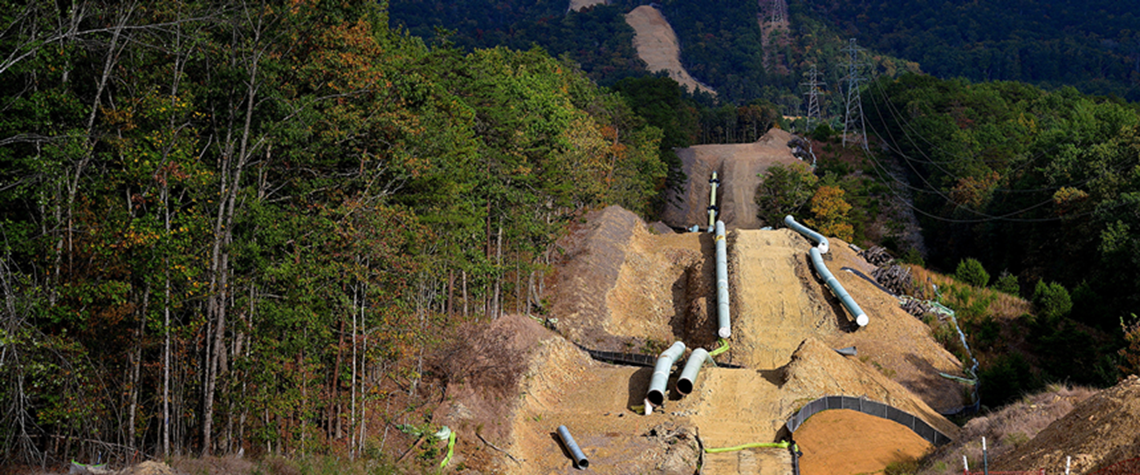
Lengths of pipe wait to be laid in the ground along the Mountain Valley Pipeline route
US Midstream Politics
Roger Bezdek
Washington, DC
9 June 2023
Follow @PetroleumEcon
Forward article link
Share PDF with colleagues

US debt deal to have lasting consequences for oil and gas

Approval of Mountain Valley Pipeline could set a legal precedent, while permitting reform may make it easier for other projects to advance

The US averted an unprecedented federal debt default in early June, after President Biden signed the Fiscal Responsibility Act (FRA) into law with just two days to spare following months of acrimonious negotiations. A default would have had catastrophic economic and financial consequences for the US and other nations. Republicans refused to raise the borrowing limit unless Democrats agreed to reduce spending, leading to a standoff that was resolved only at the 11th hour after agreement was reached between Biden and House Speaker Kevin McCarthy. The FRA suspends the debt limit until 2025—after the next presidential election—and also introduces significant provisions affecting the energy secto

Also in this section
OPEC+ boosted production before crisis
9 March 2026
Petroleum Economist analysis sees increases in output from Saudi Arabia, Venezuela and Kazakhstan among others before region’s murky descent
Energy dominance as diplomatic leverage
9 March 2026
Energy sanctions are becoming an increasingly prominent tool of US foreign policy, with the country’s growth in oil and gas production allowing it to impose pressure on rivals without jeopardising its own energy security or that of its allies, argues Matthew McManus, a visiting fellow at the National Center for Energy Analytics
Petroleum Economist: March 2026
6 March 2026
The March 2026 issue of Petroleum Economist is out now!
Next wave of floating LNG growth in developing markets
6 March 2026
After Europe’s rapid buildout of floating LNG import capacity, Exmar CEO Carl-Antoine Saverys says future growth in floating gas infrastructure will increasingly be driven by developing markets as lower prices, rising energy demand and the need to replace coal unlock new opportunities for unconventional and tailor-made solutions

Share PDF with colleagues

COPYRIGHT NOTICE: PDF sharing is permitted internally for Petroleum Economist Gold Members only. Usage of this PDF is restricted by <%= If(IsLoggedIn, User.CompanyName, "")%>’s agreement with Petroleum Economist – exceeding the terms of your licence by forwarding outside of the company or placing on any external network is considered a breach of copyright. Such instances are punishable by fines of up to US$1,500 per infringement
Send

Forward article Link

Send
Sign Up For Our Newsletter
Project Data
Maps
Podcasts
Social Links
Featured Video
Home
  • About us
  • Subscribe
  • Reaching your audience
  • PE Store
  • Terms and conditions
  • Contact us
  • Privacy statement
  • Cookies
  • Sitemap
All material subject to strictly enforced copyright laws © 2025 The Petroleum Economist Ltd
Cookie Settings
;

Search


