


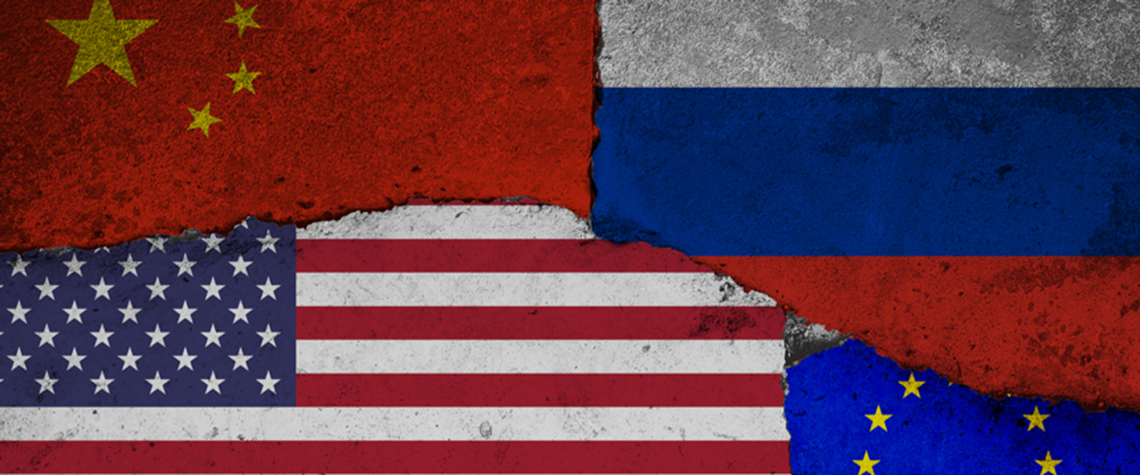
The departure of Western firms from Russia leaves space for China
Russia hopes China can fill IOC gap
Moscow is attempting to deepen its close cooperation with Asian countries—in particular China—to minimise the impact of sanctions on its oil and gas sector
Majors such as ExxonMobil and BP abandoned their partnerships with Russia shortly after the Kremlin went to war in Ukraine. Following their departure, Moscow is looking to China as a potential replacement—at least partially—for the oil and gas sector technologies and investment that would previously have come from the West. Chinese NOCs may be the most likely partners for a number of significant projects that have lost Western investors, including the 25pc stake in state-controlled oil firm Rosneft abandoned by BP earlier this year, ExxonMobil’s former share in the Sakhalin-1 project and Norwegian state-controlled Equinor’s various joint venture stakes. Additionally, Austria’s OMV halted neg

Also in this section
1 April 2026
Golden Pass’s startup offers QatarEnergy a timely boost but may also force a difficult choice between honouring disrupted contracts and capitalising on soaring spot LNG prices
1 April 2026
It is not a case of if or when, but the length and magnitude of economic damage from elevated oil prices
1 April 2026
The US-Iran conflict demonstrates the need for diversification in several senses of the word. It also exposes the limits of Washington applying pressure on major oil and gas producers it considers geopolitical adversaries
31 March 2026
Disappointing results in its bidding round are a reality check for Libya, and global exploration generally



