


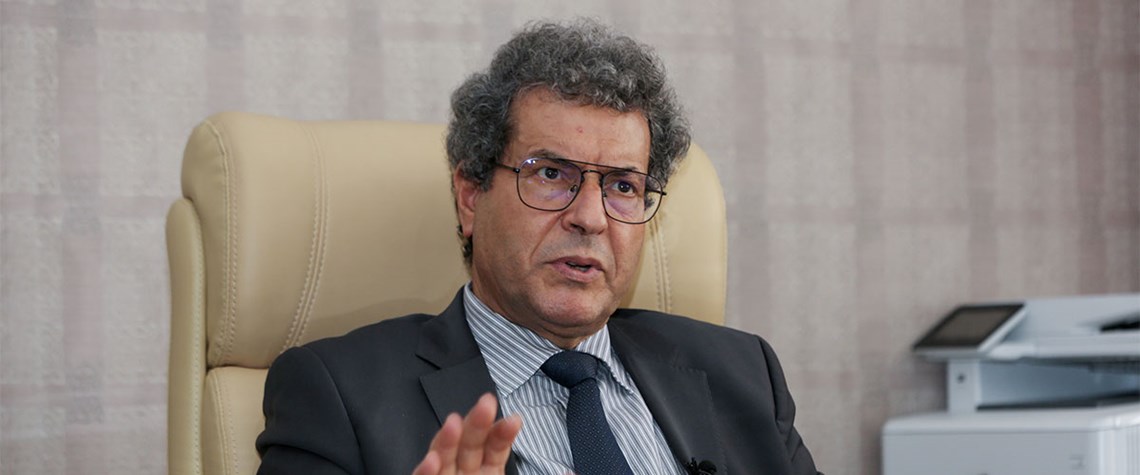
Libyan oil minister Mohamed Oun
No end in sight to Libyan stasis
Questions over the oil minister's competence are another new low for the crisis-racked North African producer
The chaos enveloping Libya’s oil sector has gone from bad to worse in June. Conflicting updates on the state of the country's production can now be added to blockaded ports and political wrangling. Confidence in oil minister Mohamed Oun has not been enhanced by his claim last Monday that protests had caused output to fall to 100,000bl/d, despite his officials insisting the true number was 700,000bl/d. Yesterday, Oun conceded said officials were correct, without explaining the discrepancy. The confusion has done nothing to reassure oil markets that Libya’s upstream sector has any sort of hand on the tiller, never mind a steady one. Protests began again in mid-April, shutting down two fields i

Also in this section
1 April 2026
Golden Pass’s startup offers QatarEnergy a timely boost but may also force a difficult choice between honouring disrupted contracts and capitalising on soaring spot LNG prices
1 April 2026
It is not a case of if or when, but the length and magnitude of economic damage from elevated oil prices
1 April 2026
The US-Iran conflict demonstrates the need for diversification in several senses of the word. It also exposes the limits of Washington applying pressure on major oil and gas producers it considers geopolitical adversaries
31 March 2026
Disappointing results in its bidding round are a reality check for Libya, and global exploration generally



