


Newsletters | Request Trial | Log in | Advertise | Digital Issue   |   Search
  • Upstream
  • Midstream & Downstream
  • Gas & LNG
  • Trading & Markets
  • Corporate & Finance
  • Geopolitics
  • Podcasts
Search
Related Articles
MENA states try to change their gas fortunes
While Syria has gas import plans and Jordan is targeting greater production, Egypt is struggling with declining output and Lebanon with the after-effects of conflict
Europe’s malaise offers risk and opportunity for Turkey
The EU and Turkey should look beyond stalled accession talks and towards a new partnership that encompasses energy integration and carbon alignment
Turkey navigates game-changing LNG dynamics
The country is aiming for hub status as it boosts regas and storage capacity, but while the opportunity is great, there is much work still to do
Iraq’s tangled Ceyhan oil web
KRG, Iraq’s central government and Turkey are all working to get exports flowing from the key port, but complications remain
Turkey aims to reduce dependence on energy imports
Country is boosting domestic energy production while targeting development of oil and gas reserves in Africa and Asia
Libya’s NOC sees E&P optimism through the anger
North African producer hopeful of bringing in IOCs despite the disagreements over terms as latest bidding round is launched
Hydrocarbon Processing Refining Databook 2025: Middle East & Africa
The Middle East is focusing on modernisation and expansion projects, while Africa is seeking to reduce its imports of refined products
Turkmenistan, Turkey and Iran in gas triangle
The new agreement for Turkmen gas exports via Iran marks another step in Turkey’s efforts to become regional gas hub but may have limited benefits for Tehran
Libya’s armed oil industry takeover
Booming crude production has been met with international caution after the UN’s damning assessment
Turkey shows Europe its gas hand
Country offers to boost gas exports to Europe to 10bcm/yr, but serious questions remain
Turkey Libya
Gerald Butt
9 December 2019
Follow @PetroleumEcon
Forward article link
Share PDF with colleagues

Turkey pushes East Mediterranean boundaries

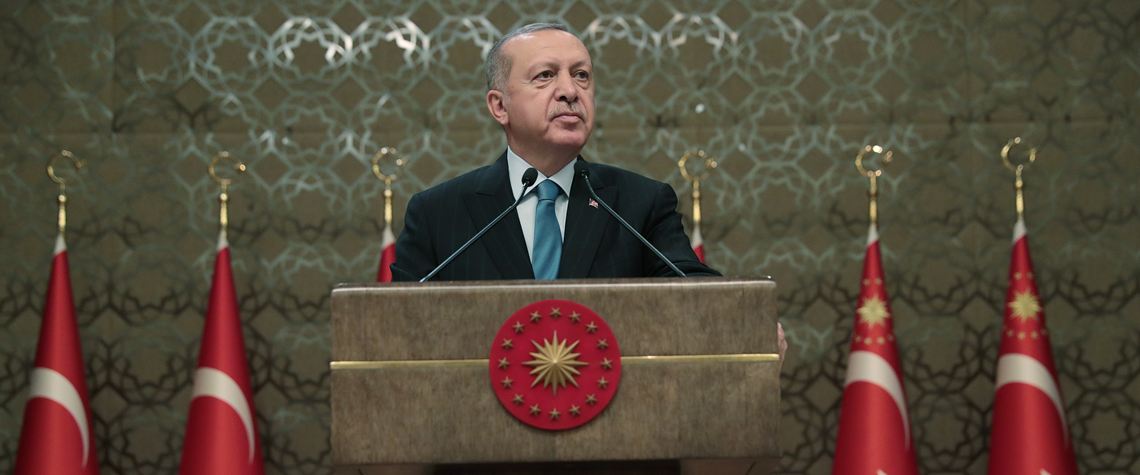
The Erdogan regime’s maritime border agreement with Libya can only serve to ramp up regional tensions

Turkey has gone a step further in its East Mediterranean power play, signing a memorandum of understanding (MoU) with the internationally recognised government in Libya on their joint maritime border. On the face of it, the MoU places a vast swathe of the Eastern Mediterranean Sea into Turkish hands, including not just the waters off Cyprus but around some Greek islands as well.  The Ankara authorities already asserts the right to search for hydrocarbons in any spot that Turkey sees as within its continental shelf area; for several months, its drill ships have been operating inside Cyprus’ economic exclusion zone (EEZ), with a promise of more to come.   Predictably, the Cypriot and Greek gov

Also in this section
Learning from oil’s supercycle miss
5 December 2025
Mistaken assumptions around an oil bull run that never happened are a warning over the talk of a supply glut
Explainer: What do Russia’s oil giants own overseas?
4 December 2025
Time is running out for Lukoil and Rosneft to divest international assets that will be mostly rendered useless to them when the US sanctions deadline arrives in mid-December
Letter from Saudi Arabia: US-Saudi energy ties enter a new phase
Opinion
3 December 2025
Aramco’s pursuit of $30b in US gas partnerships marks a strategic pivot. The US gains capital and certainty; Saudi Arabia gains access, flexibility and a new export future
Letter from London: Oil’s golden triangle
Opinion
2 December 2025
The interplay between OPEC+, China and the US will define oil markets throughout 2026

Share PDF with colleagues

COPYRIGHT NOTICE: PDF sharing is permitted internally for Petroleum Economist Gold Members only. Usage of this PDF is restricted by <%= If(IsLoggedIn, User.CompanyName, "")%>’s agreement with Petroleum Economist – exceeding the terms of your licence by forwarding outside of the company or placing on any external network is considered a breach of copyright. Such instances are punishable by fines of up to US$1,500 per infringement
Send

Forward article Link

Send
Sign Up For Our Newsletter
Project Data
Maps
Podcasts
Social Links
Featured Video
Home
  • About us
  • Subscribe
  • Reaching your audience
  • PE Store
  • Terms and conditions
  • Contact us
  • Privacy statement
  • Cookies
  • Sitemap
All material subject to strictly enforced copyright laws © 2025 The Petroleum Economist Ltd
Cookie Settings
;

Search


