


Newsletters | Request Trial | Log in | Advertise | Digital Issue   |   Search
  • Upstream
  • Midstream & Downstream
  • Gas & LNG
  • Trading & Markets
  • Corporate & Finance
  • Geopolitics
  • Podcasts
Search
Related Articles
Explainer: What do Russia’s oil giants own overseas?
Time is running out for Lukoil and Rosneft to divest international assets that will be mostly rendered useless to them when the US sanctions deadline arrives in mid-December
Letter from London: Oil’s golden triangle
The interplay between OPEC+, China and the US will define oil markets throughout 2026
Tax policy will shape Russia’s oil future
The consensus among market observers is that the country’s oil output will fall in the long term. Yet few recognise how Moscow’s shifting tax regime is designed to keep the next barrel commercially viable
The curious case of oil-on-water
The market is facing being drowned in excess crude, but one caveat is that a large chunk is due to buyers reluctant to snap up sanctioned barrels
Lukoil loses its growth prospects
The Russian firm made a significant attempt to expand overseas over the past two decades but is now trying to divest its global operations
Turkmenistan's pipe dream
Construction of the pipeline in Afghanistan is making tangible progress, but extending it into Pakistan and India remains unrealistic for political reasons
Explainer: How the EU will wean itself off Russian gas
Questions remain about how the phase-out will be implemented and enforced in practice
China’s oil plan comes together
The country’s rapid output growth is an example that other producers could learn from
China seizes oil security opportunity
A combination of geopolitical uncertainty and OPEC+ barrels has driven a renewed focus on building strategic oil stocks despite flagging demand
Arctic LNG comes in from the cold
Beijing now appears prepared to accept discounted Russian LNG, even at the cost of heightened sanctions risk
Turkmenistan China Russia
Robert Cutler
6 June 2019
Follow @PetroleumEcon
Forward article link
Share PDF with colleagues

Third time lucky for Trans-Caspian Gas Pipeline?

Financial and institutional obstacles to the project appear at last to be clearing

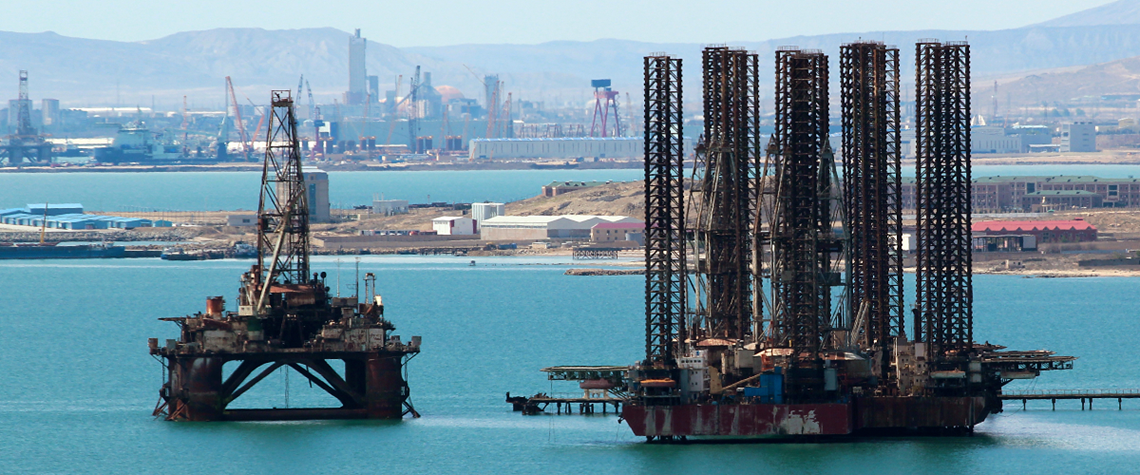
The current effort—the third—to realise the Trans-Caspian Gas Pipeline (TCGP) has better prospects than the previous ones. In order to evaluate its chances of success, one must understand both its history and its unaccustomed financing structure. The first attempt to develop the TCGP foundered in the late 1990s, when Italian engineers developed new technology enabling Gazprom to lay an ultra-deep pipeline under the Black Sea for direct supplies to Turkey. Based on it, Russia proposed the Blue Stream pipeline to Turkey, two strings of 9bn m³/yr each. The subsequent take-or-pay agreement with Gazprom affected Turkey's previous agreement with Turkmenistan. Instead of taking the initially propos

Also in this section
Venezuela’s true oil potential
9 January 2026
The Latin American producer’s crude prospects rely on a multi-pronged approach where even the relatively easy wins will take considerable time, effort and cost
Outlook 2026: China’s ‘electrostate’ vision
Outlook 2026
9 January 2026
While many forecasters are reasserting the importance of oil and gas, petrostates should be under no illusion things are changing, and faster than they might think
Southeast Asia’s digital age requires the right energy mix
8 January 2026
Indonesia and Malaysia are at the dawn of breathtaking digital capabilities. Their energy infrastructure must keep up with their ambitions
Outlook 2006: The North Sea’s next chapter – From backbone to blueprint
Outlook 2026
8 January 2026
The next five years will be critical for the North Sea, and it will be policy not geology that will decide the basin’s future

Share PDF with colleagues

COPYRIGHT NOTICE: PDF sharing is permitted internally for Petroleum Economist Gold Members only. Usage of this PDF is restricted by <%= If(IsLoggedIn, User.CompanyName, "")%>’s agreement with Petroleum Economist – exceeding the terms of your licence by forwarding outside of the company or placing on any external network is considered a breach of copyright. Such instances are punishable by fines of up to US$1,500 per infringement
Send

Forward article Link

Send
Sign Up For Our Newsletter
Project Data
Maps
Podcasts
Social Links
Featured Video
Home
  • About us
  • Subscribe
  • Reaching your audience
  • PE Store
  • Terms and conditions
  • Contact us
  • Privacy statement
  • Cookies
  • Sitemap
All material subject to strictly enforced copyright laws © 2025 The Petroleum Economist Ltd
Cookie Settings
;

Search


