


Newsletters | Request Trial | Log in | Advertise | Digital Issue   |   Search
  • Upstream
  • Midstream & Downstream
  • Gas & LNG
  • Trading & Markets
  • Corporate & Finance
  • Geopolitics
  • Podcasts
Search
Related Articles
Letter from Asia: The nuanced India-Russia oil picture
The South Asian consumer’s next move could tighten the Middle East oil market overnight
Letter from the Middle East: Aramco provides big global gas reveal
The Saudi energy leader’s announcement of first production at Jafurah and the launch of operations at the Tanajib Gas Plant marks a turning point not just for the company, but for the world’s energy landscape
Arctic LNG 2 adds Arc7 to its shadow fleet
Having found a steady buyer in China for its sanctioned gas, the Russian project is positioned for nearly year-round operations, yet its 11-vessel ‘shadow fleet’ is still insufficient to achieve anywhere near capacity utilisation.
Letter from Saudi Arabia: Big oil meets big shovel
As Saudi Arabia pushes mining as a new pillar of its economy, Saudi Aramco is positioning itself at the intersection of hydrocarbons, minerals and industrial policy
Explainer: What do Russia’s oil giants own overseas?
Time is running out for Lukoil and Rosneft to divest international assets that will be mostly rendered useless to them when the US sanctions deadline arrives in mid-December
Letter from Saudi Arabia: US-Saudi energy ties enter a new phase
Aramco’s pursuit of $30b in US gas partnerships marks a strategic pivot. The US gains capital and certainty; Saudi Arabia gains access, flexibility and a new export future
Tax policy will shape Russia’s oil future
The consensus among market observers is that the country’s oil output will fall in the long term. Yet few recognise how Moscow’s shifting tax regime is designed to keep the next barrel commercially viable
The curious case of oil-on-water
The market is facing being drowned in excess crude, but one caveat is that a large chunk is due to buyers reluctant to snap up sanctioned barrels
Lukoil loses its growth prospects
The Russian firm made a significant attempt to expand overseas over the past two decades but is now trying to divest its global operations
Accelerating MENA’s gas transformation
Gas has become a pillar of MENA economies and a catalyst for development strategies, fostering cooperation and creating new paths for economic diversification. Continued progress will require substantial investment and adapted regulations
Vladimir Putin Russia Saudi Aramco Saudi Arabia
Clare Dunkley
21 October 2019
Follow @PetroleumEcon
Forward article link
Share PDF with colleagues

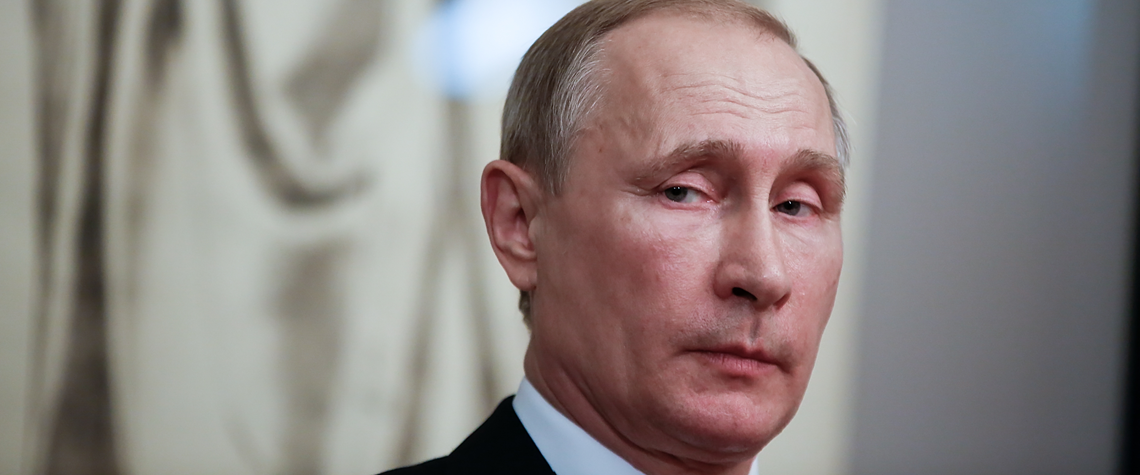
Putin re-energises Russia’s Mid-East Gulf ties

The deals thus far are mostly modest, but the Russian president’s Gulf visit laid the ground for wider cooperation

Vladimir Putin’s state visits in October to Saudi Arabia and the United Arab Emirates (UAE) left a trail of energy deals in their wake. And while many of the agreement are tentative or small-scale at present, they clearly represent the increased Russian appetite to up its profile in the region.    In Saudi Arabia, it was largely a case of reinvigorating earlier cooperation pledges. During King Salman’s visit to Moscow in 2017, state-owned Saudi Aramco, the Saudi Public Investment Fund and the Russian Direct Investment Fund (RDIF) agreed to create a platform for investment in Russia’s energy services sector—widely interpreted as a quid pro quo for Moscow’s support for Saudi-led global oil pro

Also in this section
Navigating the next LNG cycle
10 March 2026
Eni’s director for global gas and LNG portfolio, Cristian Signoretto, discusses how demand will respond to rising LNG supply, and how the company is expanding its own gas and LNG operations through disciplined, capital-efficient investments
OPEC+ boosted production before crisis
9 March 2026
Petroleum Economist analysis sees increases in output from Saudi Arabia, Venezuela and Kazakhstan among others before region’s murky descent
Energy dominance as diplomatic leverage
9 March 2026
Energy sanctions are becoming an increasingly prominent tool of US foreign policy, with the country’s growth in oil and gas production allowing it to impose pressure on rivals without jeopardising its own energy security or that of its allies, argues Matthew McManus, a visiting fellow at the National Center for Energy Analytics
Petroleum Economist: March 2026
6 March 2026
The March 2026 issue of Petroleum Economist is out now!

Share PDF with colleagues

COPYRIGHT NOTICE: PDF sharing is permitted internally for Petroleum Economist Gold Members only. Usage of this PDF is restricted by <%= If(IsLoggedIn, User.CompanyName, "")%>’s agreement with Petroleum Economist – exceeding the terms of your licence by forwarding outside of the company or placing on any external network is considered a breach of copyright. Such instances are punishable by fines of up to US$1,500 per infringement
Send

Forward article Link

Send
Sign Up For Our Newsletter
Project Data
Maps
Podcasts
Social Links
Featured Video
Home
  • About us
  • Subscribe
  • Reaching your audience
  • PE Store
  • Terms and conditions
  • Contact us
  • Privacy statement
  • Cookies
  • Sitemap
All material subject to strictly enforced copyright laws © 2025 The Petroleum Economist Ltd
Cookie Settings
;

Search


