


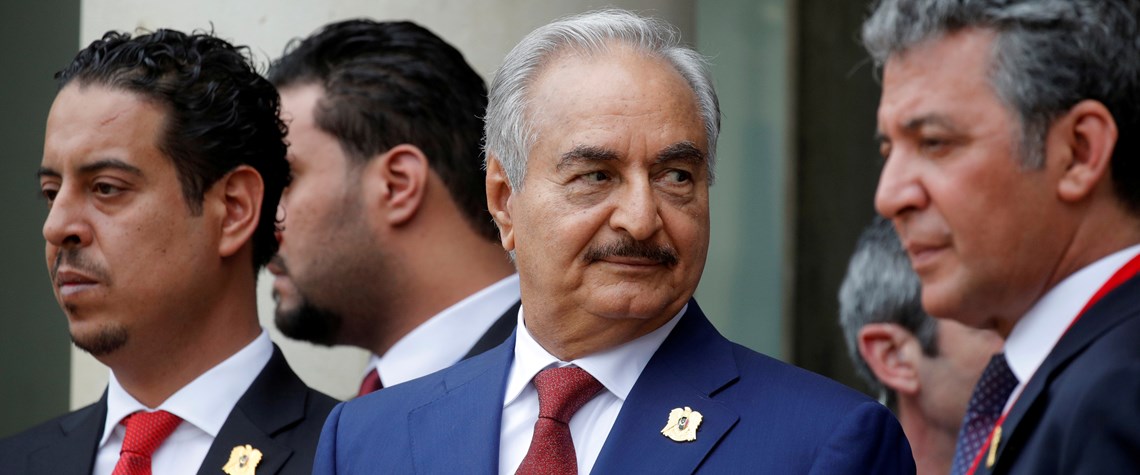
Oil revenue access drives conflict
General Khalifa Haftar's LNA is battling the GNA for control of Tripoli. But what are his options and what are the longer-term implications for the oil sector?
Haftar's Libyan National Army (LNA) — long a regional hegemon, with a smattering of allies in other parts of the country — has in 2019 made a concerted attempt to become a truly national force. Haftar has a core support base in eastern Libya, where the LNA has been fighting under a counter-terror narrative since 2014. Through careful coalition building, he has gradually cemented the support of most communities in the east, as well as the eastern branches of Libya's main political and economic institutions, including the parallel government based in Bayda. In recent months, the LNA has expanded its reach into southern Libya and has also gained more allies in the western region. Due to these r

Also in this section
1 April 2026
Golden Pass’s startup offers QatarEnergy a timely boost but may also force a difficult choice between honouring disrupted contracts and capitalising on soaring spot LNG prices
1 April 2026
It is not a case of if or when, but the length and magnitude of economic damage from elevated oil prices
1 April 2026
The US-Iran conflict demonstrates the need for diversification in several senses of the word. It also exposes the limits of Washington applying pressure on major oil and gas producers it considers geopolitical adversaries
31 March 2026
Disappointing results in its bidding round are a reality check for Libya, and global exploration generally



