


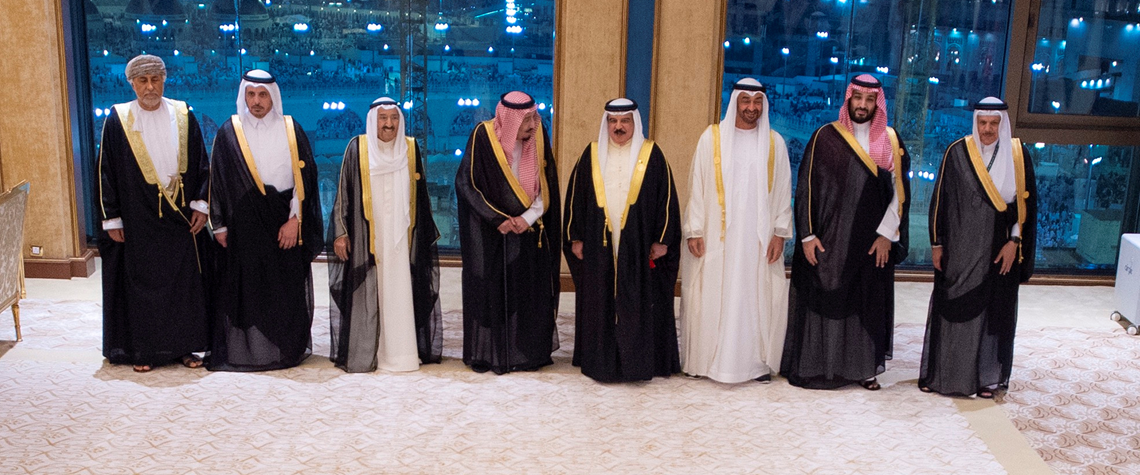
GCC leaders pose for a photo during a summit in Mecca, Saudi Arabia
Gulf states frozen in the headlights
Beset by intra-GCC tension, Gulf states are dithering in the face of the Iran crisis
The fear engendered in Saudi Arabia by the September attacks on its oil facilities at Abqaiq and Khurais is shared by the other five members of the Gulf Cooperation Council (GCC): Bahrain, Kuwait, Oman, Qatar and the United Arab Emirates (UAE). Vital installations within their own borders are now as potentially vulnerable as those in Saudi Arabia. But the GCC is not in sufficiently robust shape to face up to the threats collectively. The GCC, in its 1981 founding charter, made no reference to defence cooperation. But three years later, Gulf leaders approved the creation of a joint military unit, the Peninsula Shield Force. One of its duties is to respond to military aggression against a GCC

Also in this section
1 April 2026
Golden Pass’s startup offers QatarEnergy a timely boost but may also force a difficult choice between honouring disrupted contracts and capitalising on soaring spot LNG prices
1 April 2026
It is not a case of if or when, but the length and magnitude of economic damage from elevated oil prices
1 April 2026
The US-Iran conflict demonstrates the need for diversification in several senses of the word. It also exposes the limits of Washington applying pressure on major oil and gas producers it considers geopolitical adversaries
31 March 2026
Disappointing results in its bidding round are a reality check for Libya, and global exploration generally



