


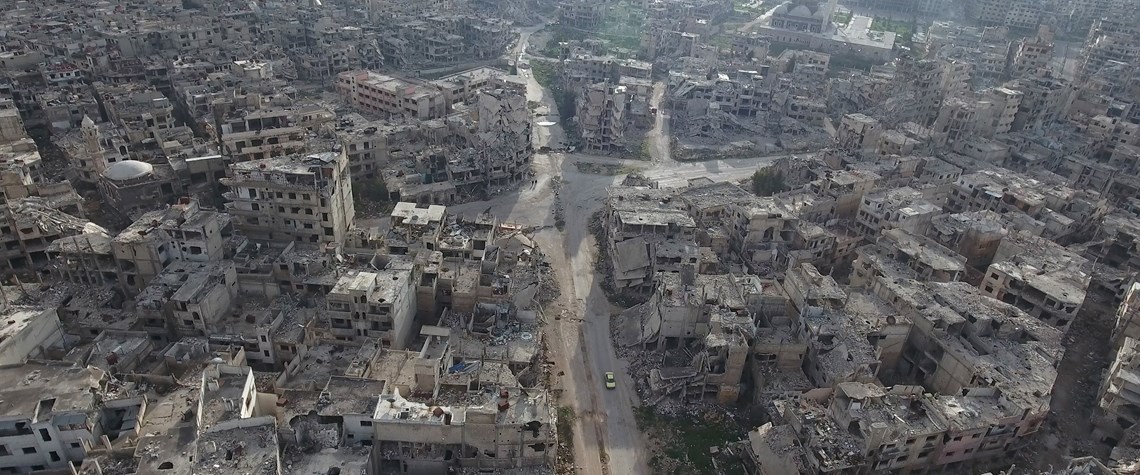
Mass destruction: the Syrian army gradually clawed back key territory from rebels
Middle East tensions rumbled on in 2018
Oil prices recovered, but old conflicts remained unresolved
The fate of Middle East oil producers in 2018—and producers elsewhere in the world—remained largely in the hands of Saudi Arabia and Russia. Despite rumours of differences in strategy and objectives, the two giants—producing around 40pc of global output—stuck to their guns and maintained production cuts agreed the previous year. It became increasingly clear that the muscle to influence oil markets had passed from Opec to the Saudi-Russian partnership. Iran, once a major energy force to match Saudi Arabia, was forced out of the running by US sanctions which, in November, were extended to the energy sector. Fear of global supply shortages resulting from an anticipated dip in Iranian oil export

Also in this section
21 April 2026
As the global energy system undergoes a fundamental realignment, Algihaz Holdings has established itself as a critical player bridging conventional energy markets and the next generation of renewable infrastructure.
21 April 2026
The 25th WPC Energy Congress is taking place from 11-15 October 2026 at the Riyadh Front Exhibition & Conference Center.
21 April 2026
The EU is still weaning itself off Russian gas, but the expansion of its import infrastructure has slowed while Russia and Kazakhstan push ahead with expanding production
20 April 2026
The region’s gas producers are investing heavily in the fuel in order to satisfy burgeoning demand resulting from economic growth and a shift to cleaner fuels



