


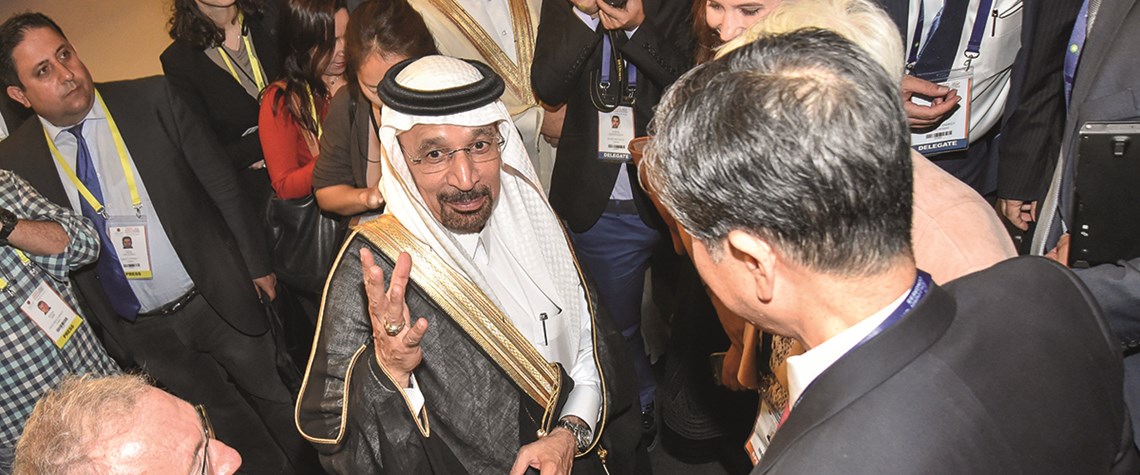
End of the war for Opec
In the end, the fiscal pressures and income loss were too great for Opec’s members to bear—and the rewards of the market-share strategy too meagre
In January 2015, Oman's urbane oil minister could barely hide his contempt. Just two months earlier, at Opec's fateful November 2014 meeting, the group-of which Oman is not a member-had stared at a weakening oil market and decided to do nothing. In the memorable words of one Saudi oil adviser, the kingdom had decided to "take its hand off the tiller". But Mohammed al-Rumhy was having none of it. "I really fail to understand how market share became more important than revenue," he said from the podium of a Petroleum Economist conference in Kuwait City. "We have created volatility-and volatility is one of those words that's bad for business." It was "politics that I don't understand". Lots of

Also in this section
22 April 2026
The failure of OMV Petrom’s keenly watched exploration campaign at Bulgaria’s Han Asparuh block highlights the Black Sea’s uneven track record, despite major successes like Neptun Deep and Sakarya
22 April 2026
Sustained strikes on ports, terminals and refineries are testing the resilience of Russia’s oil export system, yet rapid repairs, rerouting and surging prices mean the campaign has yet to deliver a decisive blow
21 April 2026
After overcoming a COVID-induced demand collapse with several years of successful market management, geopolitical events have conspired to provide the pact’s biggest test to date
21 April 2026
The regime’s policy of using nuclear ambiguity as a deterrent may have failed but it has realised it has other cards to play, while its neighbours are reappraising their approach to security



