


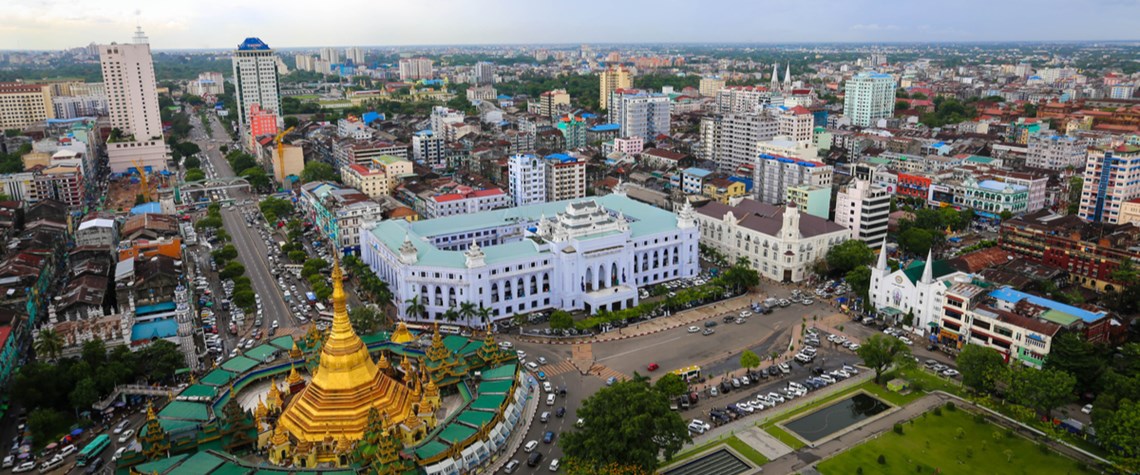
Fear of China to keep Myanmar’s LNG projects alive
Investors pulling out would create a space for Beijing to fill
The potential for China to extend its influence in Southeast Asia means Myanmar’s planned LNG projects are unlikely to become casualties of the country’s military coup. Myanmar's apparent transition to partial democracy under Aung San Suu Kyi opened the door to international investment as sanctions were lifted. However, the Ahlone and Thilawa LNG-to-power projects—in which Japanese companies have invested—could face delays as a result of reversion to military rule, consultancy Wood Mackenzie argues. Ahlone is a 388MW joint venture between Italian-Thai Development (51pc) and Japan’s Toyo Engineering (49pc), while the Thilawa project includes a 1,250MW LNG-supplied power plant and is being dev

Also in this section
21 April 2026
After overcoming a COVID-induced demand collapse with several years of successful market management, geopolitical events have conspired to provide the pact’s biggest test to date
21 April 2026
The regime’s policy of using nuclear ambiguity as a deterrent may have failed but it has realised it has other cards to play, while its neighbours are reappraising their approach to security
21 April 2026
As the global energy system undergoes a fundamental realignment, Algihaz Holdings has established itself as a critical player bridging conventional energy markets and the next generation of renewable infrastructure.
21 April 2026
The 25th WPC Energy Congress is taking place from 11-15 October 2026 at the Riyadh Front Exhibition & Conference Center.



