


Newsletters | Request Trial | Log in | Advertise | Digital Issue   |   Search
  • Upstream
  • Midstream & Downstream
  • Gas & LNG
  • Trading & Markets
  • Corporate & Finance
  • Geopolitics
  • Podcasts
Search
Related Articles
Mideast gas sector needs $200b of investment
Cash will be needed to boost production by 30% to meet region’s rapidly rising power demand, executives told the inaugural Middle East Gas Conference in December
Outlook 2026: Taking action on flaring and methane emissions
Less than two years after its launch, the World Bank’s Global Flaring and Methane Reduction Partnership is supporting abatement in 17 countries, but with flaring at a near-two-decade peak and methane emissions stubbornly high, there is work to do
India’s refining project strengthens ties to Mongolia
The Central Asian country’s first oil refinery is being funded by a $1.7b line of credit from New Delhi, but routes in and out of the country remain controlled by Russia and China
Outlook 2026: Portable cryogenic tanks – Creating new energy pathways
Cryogenic tanks offer flexible transit options for the new generation of low-carbon molecules
Outlook 2026: Freedom gas, captive buyer
Japan once wrote the book on LNG supply diversification, but it is now looking increasingly reliant on a single major provider
Outlook 2026: Underground gas storage – A critical pillar for global energy security
Heightened unpredictability in the global energy market underlines the vital nature of UGS, which provides reliability, affordability and resilience
Gas should fare better than oil under Canada’s new regime
The new federal government appears far more supportive of oil and gas than former prime minister Justin Trudeau’s climate-focused administration, but the prospects look better for the latter hydrocarbon
Turkmenistan's pipe dream
Construction of the pipeline in Afghanistan is making tangible progress, but extending it into Pakistan and India remains unrealistic for political reasons
Accelerating MENA’s gas transformation
Gas has become a pillar of MENA economies and a catalyst for development strategies, fostering cooperation and creating new paths for economic diversification. Continued progress will require substantial investment and adapted regulations
Explainer: How the EU will wean itself off Russian gas
Questions remain about how the phase-out will be implemented and enforced in practice
India Gas
Siddharth Srivastava
2 July 2020
Follow @PetroleumEcon
Forward article link
Share PDF with colleagues

India sets out multi-faceted reform to support gas

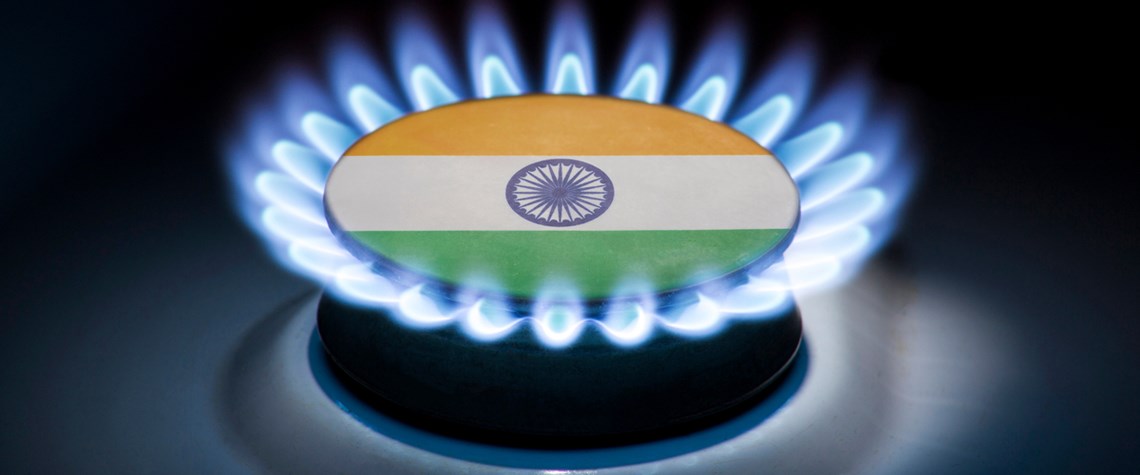
New Delhi is set to implement a new pipeline tariff policy to complement its first trading exchange and under-construction distribution network, to further boost the use of gas

The Indian government announced further measures during June to raise the share of gas in the country’s energy mix. The target is to increase the contribution of gas from c.6pc to 15pc by 2030. In mid-June, oil minister Dharmendra Pradhan and the Petroleum and Natural Gas Regulatory Board (PNGRB) announced that a new pipeline tariff policy would soon be unveiled to rationalise gas prices across the country. India also launched its first gas trading exchange, which will enable entities such as Shell and Dutch and Singaporean commodities trading houses Vitol and Trafigura to sell LNG directly to domestic customers at spot and forward market rates. PNGRB recently permitted the setting up of LNG

Also in this section
OPEC’s discipline sets tone for 2026
9 January 2026
OPEC+ remains on track as output falls, with only Gabon failing to hit its output targets in December, although Kazakhstan’s compliance was involuntary
Venezuela’s true oil potential
9 January 2026
The Latin American producer’s crude prospects rely on a multi-pronged approach where even the relatively easy wins will take considerable time, effort and cost
Outlook 2026: China’s ‘electrostate’ vision
Outlook 2026
9 January 2026
While many forecasters are reasserting the importance of oil and gas, petrostates should be under no illusion things are changing, and faster than they might think
Southeast Asia’s digital age requires the right energy mix
8 January 2026
Indonesia and Malaysia are at the dawn of breathtaking digital capabilities. Their energy infrastructure must keep up with their ambitions

Share PDF with colleagues

COPYRIGHT NOTICE: PDF sharing is permitted internally for Petroleum Economist Gold Members only. Usage of this PDF is restricted by <%= If(IsLoggedIn, User.CompanyName, "")%>’s agreement with Petroleum Economist – exceeding the terms of your licence by forwarding outside of the company or placing on any external network is considered a breach of copyright. Such instances are punishable by fines of up to US$1,500 per infringement
Send

Forward article Link

Send
Sign Up For Our Newsletter
Project Data
Maps
Podcasts
Social Links
Featured Video
Home
  • About us
  • Subscribe
  • Reaching your audience
  • PE Store
  • Terms and conditions
  • Contact us
  • Privacy statement
  • Cookies
  • Sitemap
All material subject to strictly enforced copyright laws © 2025 The Petroleum Economist Ltd
Cookie Settings
;

Search


