


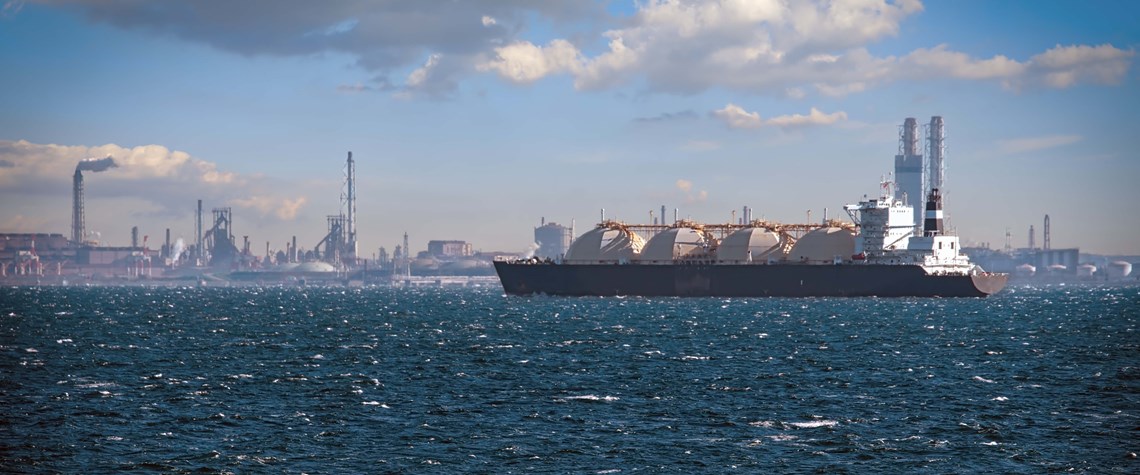
An LNG vessel in Japan’s Tokyo Bay
Gas readies for its oil moment
The growth in spot LNG is transforming gas into a globalised commodity market
A need to transact naturally leads to markets. But the very nature of the energy industry—large capital investments, long gestation periods, specificity of assets—can lead to very volatile markets, with high risk and the potential for violent boom-and-bust cycles. As a result, the industry can tend away from fledgling competitive markets and towards natural monopolies. Having one large terminal or pipeline is more efficient than having many small ones. On the flip side, monopolies can often ultimately result in lower output and higher prices. Within non-free market value chains, a government normally takes a hand in regulating prices or ensuring ‘security of supply’—and bring with them new p

Also in this section
21 April 2026
After overcoming a COVID-induced demand collapse with several years of successful market management, geopolitical events have conspired to provide the pact’s biggest test to date
21 April 2026
The regime’s policy of using nuclear ambiguity as a deterrent may have failed but it has realised it has other cards to play, while its neighbours are reappraising their approach to security
21 April 2026
As the global energy system undergoes a fundamental realignment, Algihaz Holdings has established itself as a critical player bridging conventional energy markets and the next generation of renewable infrastructure.
21 April 2026
The 25th WPC Energy Congress is taking place from 11-15 October 2026 at the Riyadh Front Exhibition & Conference Center.



