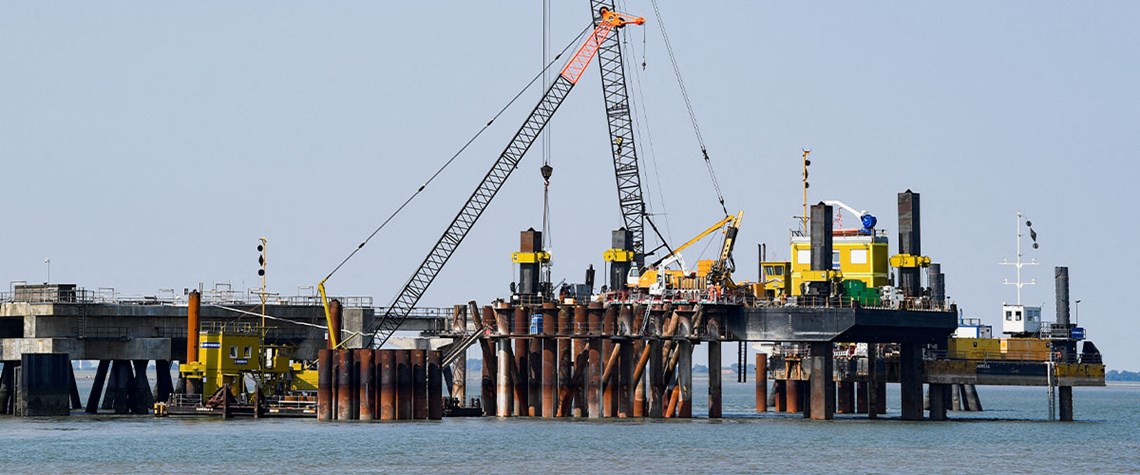
Wilhelmshaven will be used to import synthetic methane
Future LNG overcapacity to boost hydrogen imports
Regasification terminals can be repurposed to receive ammonia and synthetic methane
Europe’s LNG terminals could eventually provide significant hydrogen import capacity, using either ammonia or synthetic methane, according to energy industry experts. European countries are scrambling to build extra LNG import capacity as they diversify their gas supplies following Russia’s invasion of Ukraine. At the same time, they are seeking to reduce gas consumption even faster than previously planned. This could rapidly lead to a substantial gas import overcapacity, says Brussels-based thinktank Bruegel. Bruegel calculates an expected natural gas supply of 4,500TWh from 2026, up from 3,750TWh in 2023, as LNG terminals start to come online. Some will be temporary floating terminals, but

Also in this section
25 March 2026
The Middle East energy shock has highlighted the value of France’s unique potential to deploy nuclear-powered electrolysers
18 March 2026
The second fossil-fuel price shock in four years can be a much-needed catalyst for investment in the sector
9 March 2026
Hydrogen has not stalled in the UK because the technology does not work. The problem is that the system around it does not yet move at the speed required
4 March 2026
Turmoil in Middle East reminds nascent clean hydrogen sector that its future prospects are dependent on global energy markets and geopolitics