


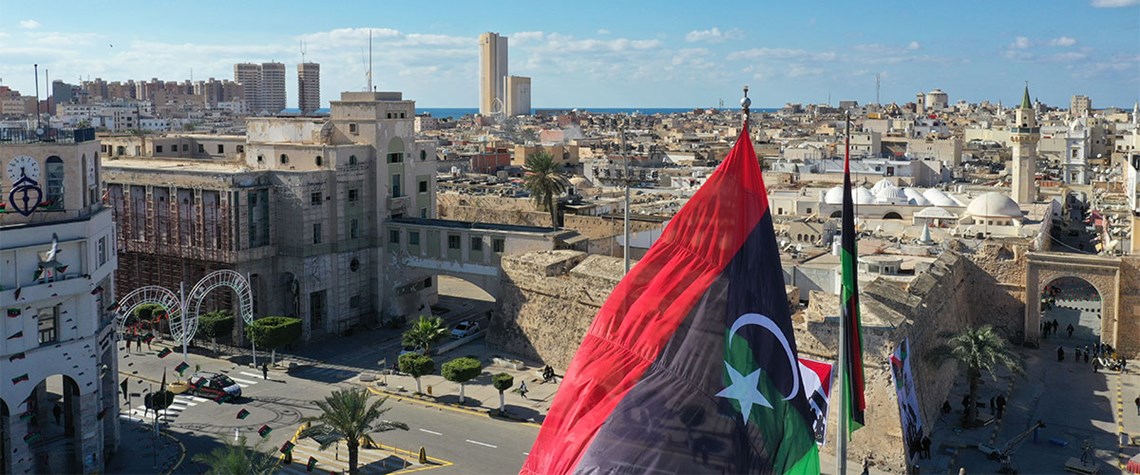
Tripoli
Libya’s upstream promise still hamstrung by instability
But the troubled north African nation is not short of international investment interest
Soon after Libyan oil minister Mohamed Oun spoke to Petroleum Economist in late September, Libya’s National Oil Corporation (NOC) signed a memorandum of understanding with Norway’s Equinor with the stated aim “to study and evaluate the oil and gas potential in the Libyan maritime region”. The deal was signed in Tripoli and included provisions to train young Libyans for the oil and gas sector. Equinor has been active in Libya for decades and holds non-operating stakes in the Murzuq Basin and the Mabruk field, where production was suspended following a 2015 militant attack. The Norwegian firm also stated that “more recently, our engagement in lifting and marketing Libyan crude oil has become a

Also in this section
1 April 2026
Golden Pass’s startup offers QatarEnergy a timely boost but may also force a difficult choice between honouring disrupted contracts and capitalising on soaring spot LNG prices
1 April 2026
It is not a case of if or when, but the length and magnitude of economic damage from elevated oil prices
1 April 2026
The US-Iran conflict demonstrates the need for diversification in several senses of the word. It also exposes the limits of Washington applying pressure on major oil and gas producers it considers geopolitical adversaries
31 March 2026
Disappointing results in its bidding round are a reality check for Libya, and global exploration generally



