


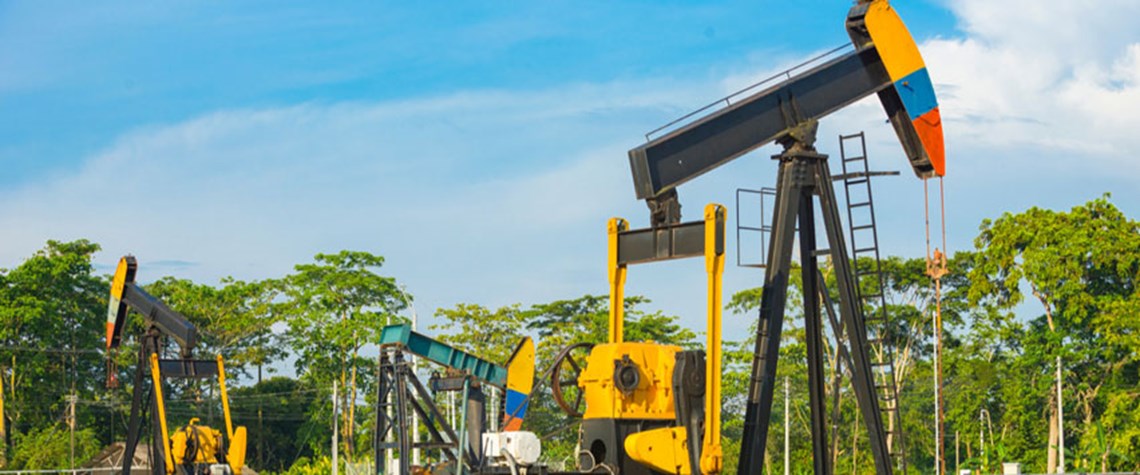
Colombian oil production has slipped into decline
Warning signs for Colombia’s upstream
The clock is ticking to prevent years of crude production decline ending the country’s ability to meet its own energy needs
Months of national protests last year dealt another blow to Colombia’s ambitions of reviving its flagging crude production. The country’s National Hydrocarbons Agency (ANH) estimates that output averaged just 736,397bl/d in 2021, down from 779,119bl/d the year before, which was already an 11-year low. “There has not been a significant increase in proven resource volume in years,” says Sofia Forestieri, an upstream analyst at consultancy Rystad Energy. “Crude resources total 1.8bn bl and, at the current rate, [Colombia] will only be able to sustain production for another five or six years.” Latin America’s third-largest oil producer reached peak production in 2013, with output at 990,000bl/d,

Also in this section
21 April 2026
After overcoming a COVID-induced demand collapse with several years of successful market management, geopolitical events have conspired to provide the pact’s biggest test to date
21 April 2026
The regime’s policy of using nuclear ambiguity as a deterrent may have failed but it has realised it has other cards to play, while its neighbours are reappraising their approach to security
21 April 2026
As the global energy system undergoes a fundamental realignment, Algihaz Holdings has established itself as a critical player bridging conventional energy markets and the next generation of renewable infrastructure.
21 April 2026
The 25th WPC Energy Congress is taking place from 11-15 October 2026 at the Riyadh Front Exhibition & Conference Center.



