


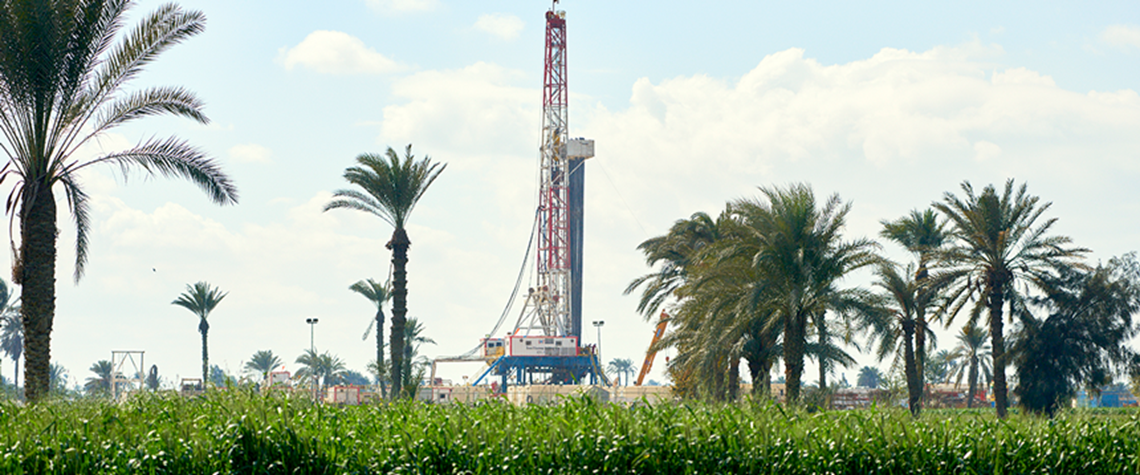
Pharos' operations in Egypt
Pharos benefits from Egypt’s flexibility
The firm’s onshore Western Desert asset allows for rapid optimisation based on the macroeconomic environment
The Covid-driven oil price crash in 2020 could hardly have come at a worse time for the Egyptian business of London-listed Pharos Energy. “We had really only just started to see the benefits flowing through from the drilling that we started when we first acquired [the El-Fayum asset] in the middle of 2019—the production levels were double where they stood when we bought it,” CEO Jann Brown tells Petroleum Economist. “If you think back to March 2020, nobody knew how low it could go, how long would it last,” she continues of that period of deep uncertainty for the industry. “Capitalising on flexibility—the ability to ramp up or down production and activity depending on price and access to liq

Also in this section
1 April 2026
Golden Pass’s startup offers QatarEnergy a timely boost but may also force a difficult choice between honouring disrupted contracts and capitalising on soaring spot LNG prices
1 April 2026
It is not a case of if or when, but the length and magnitude of economic damage from elevated oil prices
1 April 2026
The US-Iran conflict demonstrates the need for diversification in several senses of the word. It also exposes the limits of Washington applying pressure on major oil and gas producers it considers geopolitical adversaries
31 March 2026
Disappointing results in its bidding round are a reality check for Libya, and global exploration generally