


Newsletters | Request Trial | Log in | Advertise | Digital Issue   |   Search
  • Upstream
  • Midstream & Downstream
  • Gas & LNG
  • Trading & Markets
  • Corporate & Finance
  • Geopolitics
  • Podcasts
Search
Related Articles
Accelerating MENA’s gas transformation
Gas has become a pillar of MENA economies and a catalyst for development strategies, fostering cooperation and creating new paths for economic diversification. Continued progress will require substantial investment and adapted regulations
Explainer: How the EU will wean itself off Russian gas
Questions remain about how the phase-out will be implemented and enforced in practice
Gas storage to grow more critical in energy transition – IGU
The International Gas Union calls for a ‘whole-system’ approach, combining planning of gas, electricity and hydrogen networks to ensure energy systems remain flexible and resilient during the transition
Shell offshore deal signals Nigerian gas coming of age
FID on the HI development suggests the country’s chronically under-exploited gas reserves are beginning to be properly exploited
MENA states try to change their gas fortunes
While Syria has gas import plans and Jordan is targeting greater production, Egypt is struggling with declining output and Lebanon with the after-effects of conflict
MENA states sharpen their gas focus
The GCC countries and other states in the region are looking to make greater domestic use of gas, both that produced at home and imported volumes
Mideast states power up their gas priorities
Saudi Arabia, the UAE and Qatar are ploughing resources into gas—with a growing eye on facilitating domestic use in power and value-added sectors
Natural gas: A vital bridge for the Middle East’s energy future
With responsible development and rigorous regulation, gas can help the region move forward not just as an energy exporter, but as a global leader in the energy transition
MENA's gas metamorphosis
Across the Middle East and North Africa, gas is taking an enhanced role in helping build out economies that need to diversify away from crude oil dependence
ADNOC’s Australia avoidance
The Middle East NOC’s decision to exit Santos signals changing rules for Australian gas investors
Midstream bottlenecks are projected to hamper further growth
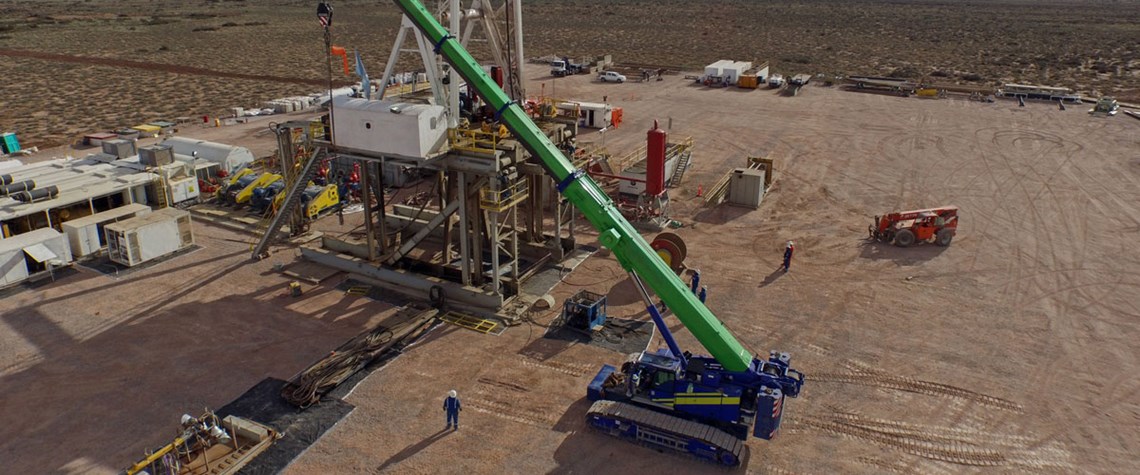
Argentina Vaca Muerta Gas
Charles Waine
26 April 2022
Follow @PetroleumEcon
Forward article link
Share PDF with colleagues

Midstream bottlenecks threaten Argentinian growth

Domestic gas in the Vaca Muerta is poised for growth, but much depends on scaling the country’s midstream

Argentina’s gas production is almost back to pre-pandemic levels, vindicating the price incentive scheme set by the government last year. But midstream bottlenecks are projected to hamper further growth in unconventionals from the Vaca Muerta shale basin until more capacity can be unlocked. The government says that expanding the Transport.Ar gas pipeline system will require $3bn to increase capacity by 44mn m³/d. The extra capacity will come from the recently sanctioned Nestor Kirchner Gas Pipeline, which is scheduled to come onstream by winter 2023 and connect the Vaca Muerta to urban centres in the country’s north. Argentinian independent Pampa Energia describes the pipeline as a “game cha

Also in this section
Lukoil loses its growth prospects
10 November 2025
The Russian firm made a significant attempt to expand overseas over the past two decades but is now trying to divest its global operations
OPEC+ nears output targets amid unsolved riddles
10 November 2025
OPEC+ has proven to be astute at bringing back oil production, but mysteries around Chinese buying, missing barrels and oil-on-water have left the group in wait-and-see mode
Germany under pressure to solve Rosneft refinery problem
7 November 2025
The Russian company’s German assets are under Berlin’s management and are exempt from sanctions, for now, but a permanent solution still needs to be found
Letter from Europe: Western retreat raises doubts over climate leadership
Opinion
6 November 2025
After years of pursuing ideologically driven climate leadership, Western powers are now stepping back under mounting political pressure and rising populist opposition—prompting concern essential climate action could be sidelined

Share PDF with colleagues

COPYRIGHT NOTICE: PDF sharing is permitted internally for Petroleum Economist Gold Members only. Usage of this PDF is restricted by <%= If(IsLoggedIn, User.CompanyName, "")%>’s agreement with Petroleum Economist – exceeding the terms of your licence by forwarding outside of the company or placing on any external network is considered a breach of copyright. Such instances are punishable by fines of up to US$1,500 per infringement
Send

Forward article Link

Send
Sign Up For Our Newsletter
Project Data
Maps
Podcasts
Social Links
Featured Video
Home
  • About us
  • Subscribe
  • Reaching your audience
  • PE Store
  • Terms and conditions
  • Contact us
  • Privacy statement
  • Cookies
  • Sitemap
All material subject to strictly enforced copyright laws © 2025 The Petroleum Economist Ltd
Cookie Settings
;

Search


