


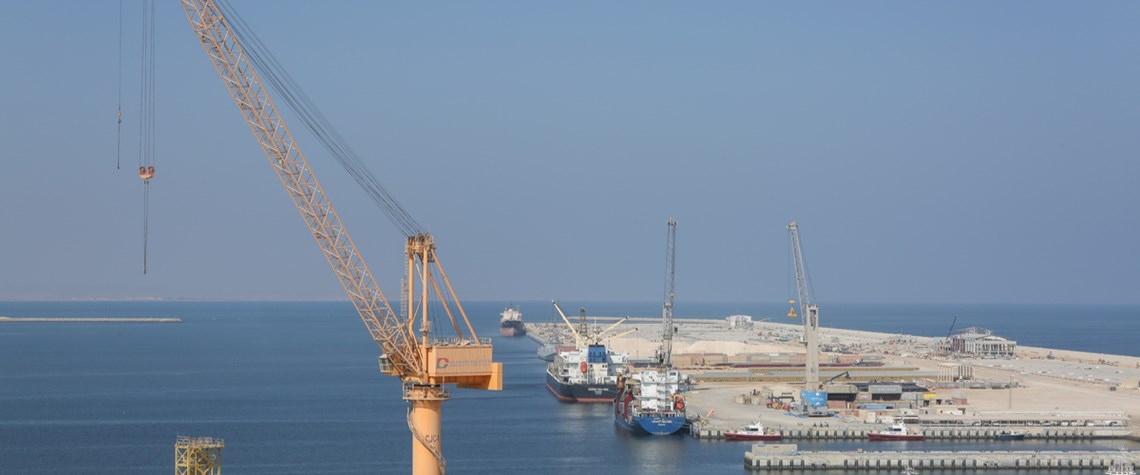
Oman’s port of Duqm
Muscat outsources oil sector expansion
Bid round and first-ever private refinery shows the government is looking to external investment
Oman is delegating the task of eking-out additional income from its oil sector to foreign and private investors as it focuses on sustaining output from existing fields, tying-up downstream loose ends, securing gas supplies and—increasingly—adapting to a decarbonised future. In mid-July, the Ministry of Energy and Mineral Resources (MEMR) announced the Mid-East Gulf’s first bid round since last year’s oil price crash, just weeks after a Chinese investor was revealed to have formally committed to a long-mooted second greenfield refinery at the nascent Duqm economic hub on Oman’s east-central coast. Licensing round The three-block auction follows a familiar pattern—covering lightly explored acr

Also in this section
1 April 2026
Golden Pass’s startup offers QatarEnergy a timely boost but may also force a difficult choice between honouring disrupted contracts and capitalising on soaring spot LNG prices
1 April 2026
It is not a case of if or when, but the length and magnitude of economic damage from elevated oil prices
1 April 2026
The US-Iran conflict demonstrates the need for diversification in several senses of the word. It also exposes the limits of Washington applying pressure on major oil and gas producers it considers geopolitical adversaries
31 March 2026
Disappointing results in its bidding round are a reality check for Libya, and global exploration generally



