


Newsletters | Request Trial | Log in | Advertise | Digital Issue   |   Search
  • Upstream
  • Midstream & Downstream
  • Gas & LNG
  • Trading & Markets
  • Corporate & Finance
  • Geopolitics
  • Podcasts
Search
Related Articles
Africa’s new producers struggle for financing
IOCs and Western lenders are reluctant to commit to new oil and gas projects in African frontier countries
Hydrocarbon Processing Refining Databook 2025: Middle East & Africa
The Middle East is focusing on modernisation and expansion projects, while Africa is seeking to reduce its imports of refined products
Letter on Africa: New African refineries could help break old dependencies
A profound shift is occurring in the global refining sector, one which might help redefine Africa’s place in worldwide trade networks
Senegal starts crude production
This will be a transformative year for the West African nation, as first LNG is also expected before the end of 2024
Ghana poised for short and medium-term oil boosts
New wells at the Jubilee field will lift output in 2023, while the Pecan field offers longer-term prospects if development can be progressed
Letter from Paris: Africa eyes future fuelled by oil and gas
A recent industry forum highlights how developing nations see hydrocarbons very differently from some in the West
Letter from Africa: Investors should look beyond region’s challenges
Opportunities abound as hydrocarbons remain crucial to growing energy needs
Senegal eyes global and domestic energy markets
Dakar is keen to meet its own energy needs, even as major export projects near start up
Global LNG analysis report 2023 — Part 1
Decarbonisation and the war in Ukraine are just two of the factors driving the massive investment in liquefaction and regasification around the world. The first part of this deep-dive analysis looks at developments in Africa
Greater Tortue Ahmeyim FPSO sets sail
The LNG project’s vessel is due to arrive in the second quarter
Ghana Senegal Mauritania Gulf of Mexico
Charles Waine
22 September 2020
Follow @PetroleumEcon
Forward article link
Share PDF with colleagues

Kosmos sheds frontier portfolio

Explorer divests non-core assets to cut costs and focus attention on proven basins

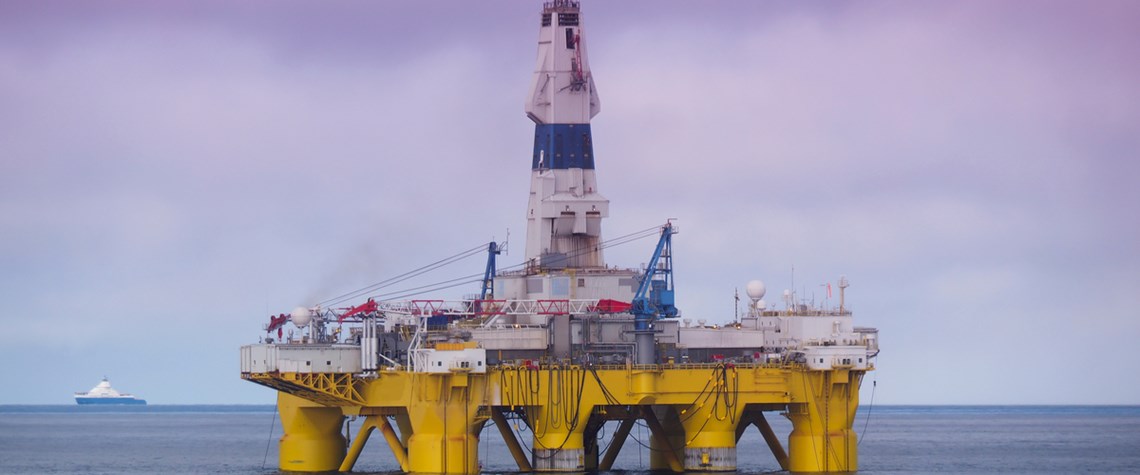
US independent Kosmos Energy has agreed to farm down its participating interest in four frontier basins to Shell. The producer will offload its stake in blocks offshore Sao Tome e Principe, Suriname, Namibia and South Africa for up to $200mn. Under the terms of the deal, Kosmos will receive an upfront cash payment of $100mn and another maximum payment of $100mn, dependent on future oil discoveries. Shell will pay Kosmos $50mn for each of any first two commercial discoveries made from an initial four well drilling programme, three of which are planned to be spudded next year.   The divestment is part of Kosmos’ strategy to concentrate on proven basins. “Kosmos cash flow has been heavily impac

Also in this section
Learning from oil’s supercycle miss
5 December 2025
Mistaken assumptions around an oil bull run that never happened are a warning over the talk of a supply glut
Explainer: What do Russia’s oil giants own overseas?
4 December 2025
Time is running out for Lukoil and Rosneft to divest international assets that will be mostly rendered useless to them when the US sanctions deadline arrives in mid-December
Letter from Saudi Arabia: US-Saudi energy ties enter a new phase
Opinion
3 December 2025
Aramco’s pursuit of $30b in US gas partnerships marks a strategic pivot. The US gains capital and certainty; Saudi Arabia gains access, flexibility and a new export future
Letter from London: Oil’s golden triangle
Opinion
2 December 2025
The interplay between OPEC+, China and the US will define oil markets throughout 2026

Share PDF with colleagues

COPYRIGHT NOTICE: PDF sharing is permitted internally for Petroleum Economist Gold Members only. Usage of this PDF is restricted by <%= If(IsLoggedIn, User.CompanyName, "")%>’s agreement with Petroleum Economist – exceeding the terms of your licence by forwarding outside of the company or placing on any external network is considered a breach of copyright. Such instances are punishable by fines of up to US$1,500 per infringement
Send

Forward article Link

Send
Sign Up For Our Newsletter
Project Data
Maps
Podcasts
Social Links
Featured Video
Home
  • About us
  • Subscribe
  • Reaching your audience
  • PE Store
  • Terms and conditions
  • Contact us
  • Privacy statement
  • Cookies
  • Sitemap
All material subject to strictly enforced copyright laws © 2025 The Petroleum Economist Ltd
Cookie Settings
;

Search


