


Newsletters | Request Trial | Log in | Advertise | Digital Issue   |   Search
  • Upstream
  • Midstream & Downstream
  • Gas & LNG
  • Trading & Markets
  • Corporate & Finance
  • Geopolitics
  • Podcasts
Search
Related Articles
Kazakhstan lays groundwork for transformation
The country is pushing to increase production and expand key projects despite challenges including OPEC+ discipline and the limitations of its export infrastructure
OPEC+’s cohesive restraint
The alliance is keeping output on track and the market in balance amid geopolitical tensions and a fragile supply-demand ledger
Turkey locks in more Azeri gas
New long-term deal is latest addition to country’s rapidly evolving supply portfolio as it eyes role as regional gas hub
OPEC’s discipline sets tone for 2026
OPEC+ remains on track as output falls, with only Gabon failing to hit its output targets in December, although Kazakhstan’s compliance was involuntary
OPEC presses pause
The group’s oil production declined in November, our latest analysis finds, amid divided sentiment over market balances and geopolitical jitters
Letter from London: Oil’s golden triangle
The interplay between OPEC+, China and the US will define oil markets throughout 2026
OPEC+ nears output targets amid unsolved riddles
OPEC+ has proven to be astute at bringing back oil production, but mysteries around Chinese buying, missing barrels and oil-on-water have left the group in wait-and-see mode
OPEC+ exposes its producers’ limits
Saudi Arabia, the UAE and Iraq appear to be only members able to increase output as Russia approaches close to maximum capacity
Letter from Vienna: OPEC at 65
Following its founding in September 1960, OPEC has become a key player in the global energy sector and a vital source of market stability
OPEC’s realignment
The group is cleansing itself of non-compliers and resetting expectations as it unwinds quicker than expected in a bid to go beyond production quotas
Kazakhstan Azerbaijan Opec Chevron TotalEnergies Equinor
Jason Corcoran
Moscow
29 May 2018
Follow @PetroleumEcon
Forward article link
Share PDF with colleagues

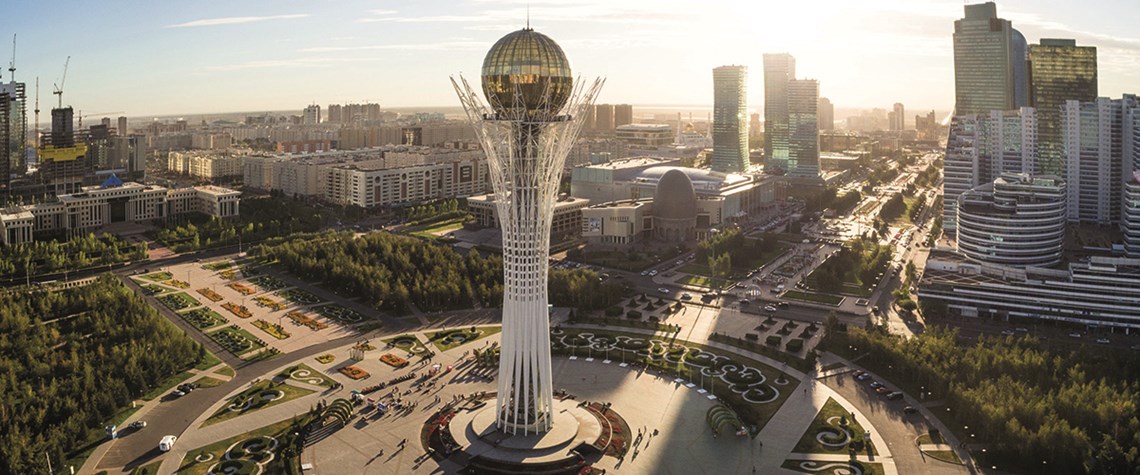
Kazakhstan & Azerbaijan: Caspian output set to rebound

Both countries signed up to the Opec deal in 2016. Neither seems destined to stick to the terms

Oil production in the Caspian is set to rebound as the Kashagan project in Kazakhstan reaches capacity and international majors circle new energy developments in Azerbaijan. Kazakhstan has already broken ranks with Opec in terms of the accord to rein in its crude output. Liquid production hit a record high last year and that was chiefly because of growth at the Kashagan project—which produced an average of 180,000 barrels a day last year—along with record output at TengizChevroil and Karachaganak. Kazakhstan's oil production rose to 1.93m b/d in February, compared with 1.8m b/d registered in 2016 at the time of the pact with Opec. Tengiz, Karachaganak and Kashagan are the largest oilfields i

Also in this section
Trump’s bid to reshape the global energy order
10 March 2026
From Venezuela to Hormuz, the US—backed by the most powerful military force ever assembled—is redrawing not only oil and gas flows but also the global balance of energy power
The diesel crisis
10 March 2026
By shutting the Strait of Hormuz, Iran has cut exports of distillate-rich Middle Eastern crude, jet fuel and diesel, and is holding the energy market hostage
Navigating the next LNG cycle
10 March 2026
Eni’s director for global gas and LNG portfolio, Cristian Signoretto, discusses how demand will respond to rising LNG supply, and how the company is expanding its own gas and LNG operations through disciplined, capital-efficient investments
OPEC+ boosted production before crisis
9 March 2026
Petroleum Economist analysis sees increases in output from Saudi Arabia, Venezuela and Kazakhstan among others before region’s murky descent

Share PDF with colleagues

COPYRIGHT NOTICE: PDF sharing is permitted internally for Petroleum Economist Gold Members only. Usage of this PDF is restricted by <%= If(IsLoggedIn, User.CompanyName, "")%>’s agreement with Petroleum Economist – exceeding the terms of your licence by forwarding outside of the company or placing on any external network is considered a breach of copyright. Such instances are punishable by fines of up to US$1,500 per infringement
Send

Forward article Link

Send
Sign Up For Our Newsletter
Project Data
Maps
Podcasts
Social Links
Featured Video
Home
  • About us
  • Subscribe
  • Reaching your audience
  • PE Store
  • Terms and conditions
  • Contact us
  • Privacy statement
  • Cookies
  • Sitemap
All material subject to strictly enforced copyright laws © 2025 The Petroleum Economist Ltd
Cookie Settings
;

Search


