


Newsletters | Request Trial | Log in | Advertise | Digital Issue   |   Search
  • Upstream
  • Midstream & Downstream
  • Gas & LNG
  • Trading & Markets
  • Corporate & Finance
  • Geopolitics
  • Podcasts
Search
Related Articles
The demand destruction timebomb
It is not a case of if or when, but the length and magnitude of economic damage from elevated oil prices
Lessons from the crisis
The US-Iran conflict demonstrates the need for diversification in several senses of the word. It also exposes the limits of Washington applying pressure on major oil and gas producers it considers geopolitical adversaries
Letter from the US: The oil market abyss
The overlooked oil supply issue is that even after the Strait of Hormuz opens, barrels won’t readily return
Middle East chaos creates new oil and gas trends
A complex and sometimes contradictory web of factors that include unpredictable oil prices, the globalisation of LNG markets, the expansion of Middle Eastern sovereign capital and the growth of datacentre demand will shape the energy landscape beyond 2026
The key arteries of the energy world
The Strait of Hormuz crisis highlights how key waterways can become global chokepoints
Through the oil looking glass
The extent of the US-Israel war with Iran means there will be no going back to the previous market equilibrium no matter how the conflict ends
Do not fear runaway Henry Hub prices
Rising LNG exports and AI-driven power demand have raised concerns that US gas prices could climb sharply, but analysts say abundant shale supply and continued productivity gains should keep Henry Hub within a range that preserves the competitiveness of US LNG
Will policymakers panic before the oil market?
Risks of shortages in oil products may cause world leaders to panic and make mistakes instead of letting the market do what it does best
India taking pole position on oil demand growth
The country’s rapidly expanding economy is boosting its consumption of oil as demand for the fuel slows elsewhere in the world
Letter from London: The oil market should panic tomorrow
Emergency oil stocks provide a last line of defence to oil market shocks, so the IEA’s unprecedented 400m bl release represents something of a double-edged sword
Markets
Iman Nasseri
17 January 2024
Follow @PetroleumEcon
Forward article link
Share PDF with colleagues

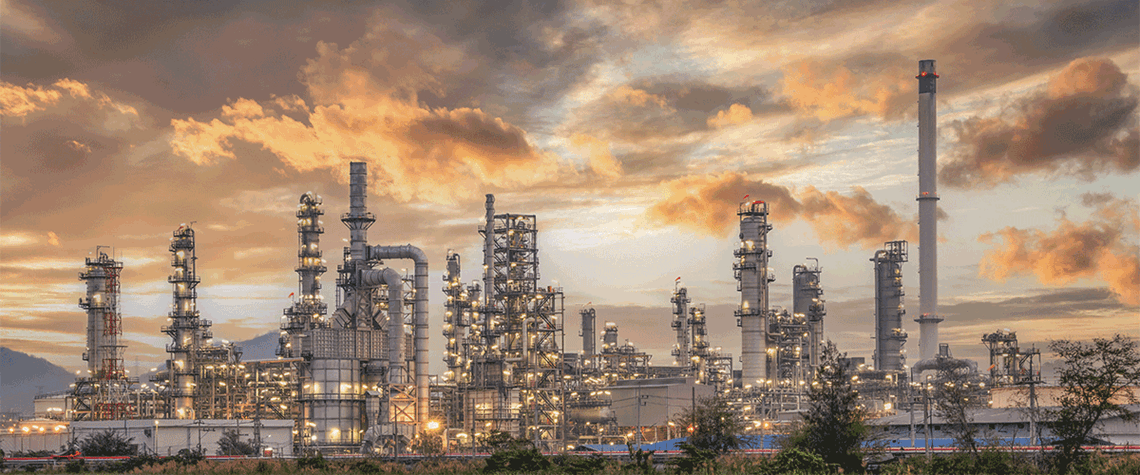
Outlook 2024: Middle East to continue making headlines in 2024

Especially in the products market, the Middle East is set to achieve significant growth

After the oil price crash of late 2014, the Middle East’s oil demand growth stalled, with a contraction of approximately 450k b/d between 2014 and 2018. This trend reversed in 2019, but was significantly offset by a 9% year-on-year contraction in 2020 due to the Covid-19 pandemic. By 2022, Middle East oil demand not only recovered to 2019 levels but also exceeded them by over 320k b/d, nearly compensating for the demand loss observed since 2014. In 2023, the Middle East is set to achieve over 2% annual growth in total oil demand, reaching a record high of 7.4m b/d. The primary reason behind the stagnation of oil demand growth in the Mi

Also in this section
Qatar’s Golden Pass dilemma
1 April 2026
Golden Pass’s startup offers QatarEnergy a timely boost but may also force a difficult choice between honouring disrupted contracts and capitalising on soaring spot LNG prices
The demand destruction timebomb
1 April 2026
It is not a case of if or when, but the length and magnitude of economic damage from elevated oil prices
Lessons from the crisis
1 April 2026
The US-Iran conflict demonstrates the need for diversification in several senses of the word. It also exposes the limits of Washington applying pressure on major oil and gas producers it considers geopolitical adversaries
Libya's potential goes unrealised
31 March 2026
Disappointing results in its bidding round are a reality check for Libya, and global exploration generally

Share PDF with colleagues

COPYRIGHT NOTICE: PDF sharing is permitted internally for Petroleum Economist Gold Members only. Usage of this PDF is restricted by <%= If(IsLoggedIn, User.CompanyName, "")%>’s agreement with Petroleum Economist – exceeding the terms of your licence by forwarding outside of the company or placing on any external network is considered a breach of copyright. Such instances are punishable by fines of up to US$1,500 per infringement
Send

Forward article Link

Send
Sign Up For Our Newsletter
Project Data
Maps
Podcasts
Social Links
Featured Video
Home
  • About us
  • Subscribe
  • Reaching your audience
  • PE Store
  • Terms and conditions
  • Contact us
  • Privacy statement
  • Cookies
  • Sitemap
All material subject to strictly enforced copyright laws © 2025 The Petroleum Economist Ltd
Cookie Settings
;

Search

