


Newsletters | Request Trial | Log in | Advertise | Digital Issue   |   Search
  • Upstream
  • Midstream & Downstream
  • Gas & LNG
  • Trading & Markets
  • Corporate & Finance
  • Geopolitics
  • Podcasts
Search
Related Articles
Learning from oil’s supercycle miss
Mistaken assumptions around an oil bull run that never happened are a warning over the talk of a supply glut
Letter from London: Oil’s golden triangle
The interplay between OPEC+, China and the US will define oil markets throughout 2026
The complex crude glut picture
The swelling crude supply story involves the key plot twists of reluctant buyers, limited oil stocks and refiners playing the long game
Alberta’s energy hub sees silver lining
US tariffs bolster Alberta’s Industrial Heartland exports to Asia
The curious case of oil-on-water
The market is facing being drowned in excess crude, but one caveat is that a large chunk is due to buyers reluctant to snap up sanctioned barrels
OPEC+ nears output targets amid unsolved riddles
OPEC+ has proven to be astute at bringing back oil production, but mysteries around Chinese buying, missing barrels and oil-on-water have left the group in wait-and-see mode
Nigeria charts ‘just transition’ course for NOCs
OPEC Governor Ademola Adeyemi Bero argues that only by prioritising oil and gas through partnerships with IOCs and stable OPEC market management can NOCs fulfil their pivotal global role
Oil’s fragile AI trillions
Prices risk hitting $10/bl should the tech bubble burst amid worrying economic fallout
OPEC+ exposes its producers’ limits
Saudi Arabia, the UAE and Iraq appear to be only members able to increase output as Russia approaches close to maximum capacity
US sees energy dominance as strategic necessity
The Trump administration is using energy exports to strengthen political and economic ties with allies and weaken adversaries, while simultaneously exploiting those ties to open up further markets for US energy
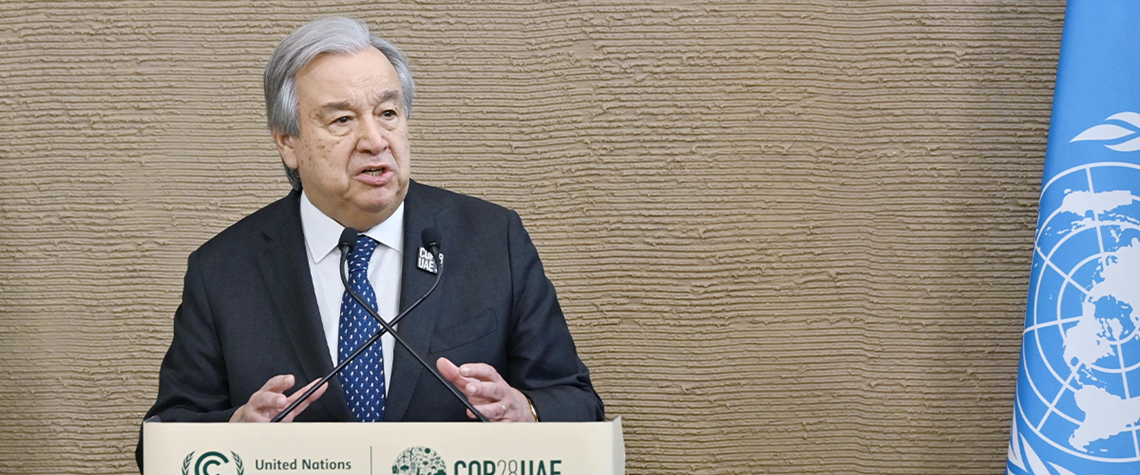
UN Secretary General Antonio Guterres at COP28
Opinion
Markets
NJ Ayuk
Johannesburg
2 February 2024
Follow @PetroleumEcon
Forward article link
Share PDF with colleagues

Letter from Africa: Lip service and duplicity at COP28

African unity, not elusive aid, is key to unlocking energy investment—especially in gas

Lurking beneath the public discourse of all things energy and environment—or carbon and climate—and concealed within what the figureheads of the net-zero movement have been saying at official conferences and elsewhere, there is a contrary message. Africa should not believe a word of it. As expected, we can categorise much of the rhetoric offered at the 28th COP meeting as supportive of the continued demonisation of fossil fuels. Unsurprisingly, the underlying sentiment of the messaging pertinent to Africa was that our hydrocarbon resources should remain in the ground.  While COP28 certainly rehashed the same tired threats and impractical recommendations of past meetings, an observable bright

Also in this section
Learning from oil’s supercycle miss
5 December 2025
Mistaken assumptions around an oil bull run that never happened are a warning over the talk of a supply glut
Explainer: What do Russia’s oil giants own overseas?
4 December 2025
Time is running out for Lukoil and Rosneft to divest international assets that will be mostly rendered useless to them when the US sanctions deadline arrives in mid-December
Letter from Saudi Arabia: US-Saudi energy ties enter a new phase
Opinion
3 December 2025
Aramco’s pursuit of $30b in US gas partnerships marks a strategic pivot. The US gains capital and certainty; Saudi Arabia gains access, flexibility and a new export future
Letter from London: Oil’s golden triangle
Opinion
2 December 2025
The interplay between OPEC+, China and the US will define oil markets throughout 2026

Share PDF with colleagues

COPYRIGHT NOTICE: PDF sharing is permitted internally for Petroleum Economist Gold Members only. Usage of this PDF is restricted by <%= If(IsLoggedIn, User.CompanyName, "")%>’s agreement with Petroleum Economist – exceeding the terms of your licence by forwarding outside of the company or placing on any external network is considered a breach of copyright. Such instances are punishable by fines of up to US$1,500 per infringement
Send

Forward article Link

Send
Sign Up For Our Newsletter
Project Data
Maps
Podcasts
Social Links
Featured Video
Home
  • About us
  • Subscribe
  • Reaching your audience
  • PE Store
  • Terms and conditions
  • Contact us
  • Privacy statement
  • Cookies
  • Sitemap
All material subject to strictly enforced copyright laws © 2025 The Petroleum Economist Ltd
Cookie Settings
;

Search


