


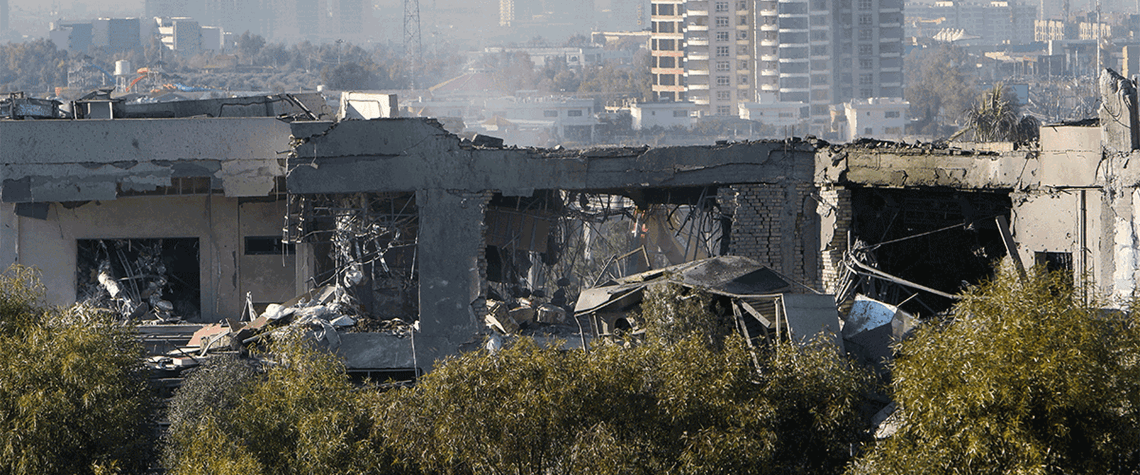
A damaged building in Erbil following the Iranian strike
Iraq looks beyond headwinds for the upside in 2024
Optimism about Kurdish production increases contrasts with a messy security situation that could obstruct oil and gas progress
Iraq’s one-step-forwards, two-steps-back progress is continuing in 2024, with recent improvements in northern crude output clouded by a deterioration in the country’s wider security situation. An Iranian missile strike on the Kurdish capital of Erbil on 15 January coincided with a general uptick in militia violence in the country—regional fallout from the Israel-Hamas conflict. A drone attack on the Khor Mor gas field in the Kurdistan region on 25 January, damaging Emirati company Dana Gas’ liquid storage tank, has reinforced oil and gas companies’ vulnerability to militia violence in Iraq’s north. The incidents obscured some recent good news for Iraq: crude production is trending upwards ag

Also in this section
1 April 2026
Golden Pass’s startup offers QatarEnergy a timely boost but may also force a difficult choice between honouring disrupted contracts and capitalising on soaring spot LNG prices
1 April 2026
It is not a case of if or when, but the length and magnitude of economic damage from elevated oil prices
1 April 2026
The US-Iran conflict demonstrates the need for diversification in several senses of the word. It also exposes the limits of Washington applying pressure on major oil and gas producers it considers geopolitical adversaries
31 March 2026
Disappointing results in its bidding round are a reality check for Libya, and global exploration generally



