


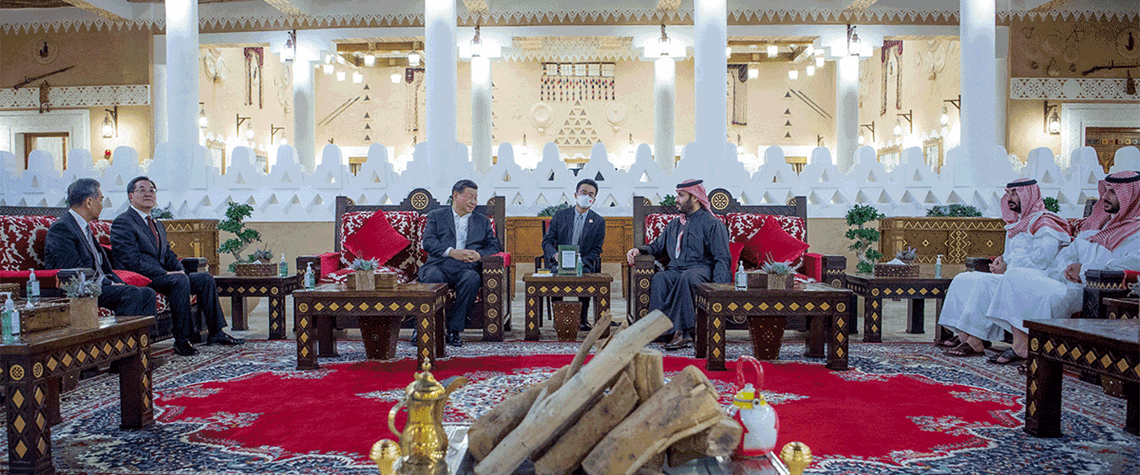
Saudi Crown Prince Mohammed Bin Salman and Chinese President Xi Jinping in Riyadh
Riyadh doubles down on Chinese downstream partnership
A flurry of petchems co-investments reflects Aramco’s drive to preserve long-term market share in both crude and its products
Chinese president Xi Jinping and Saudi Arabia’s de facto ruler Crown Prince Mohammed bin Salman (MbS) pledged to deepen energy sector cooperation during the former’s rare post-pandemic overseas visit to the Kingdom in December. And the words on this occasion were more than diplomatic platitudes. Agreements were signed during the trip for Saudi Aramco and China’s state-controlled Sinopec to co-develop a petrochemicals project in each country, as long-mooted expansion of downstream collaboration acquired concrete form. c.1.77mn bl/d – China’s Saudi crude imports The Saudi and Chinese energy sectors are symbiotically linked as respectively the world’s largest exporter and importer of cr

Also in this section
1 April 2026
Golden Pass’s startup offers QatarEnergy a timely boost but may also force a difficult choice between honouring disrupted contracts and capitalising on soaring spot LNG prices
1 April 2026
It is not a case of if or when, but the length and magnitude of economic damage from elevated oil prices
1 April 2026
The US-Iran conflict demonstrates the need for diversification in several senses of the word. It also exposes the limits of Washington applying pressure on major oil and gas producers it considers geopolitical adversaries
31 March 2026
Disappointing results in its bidding round are a reality check for Libya, and global exploration generally



